Social media’s impact on citizen led movements: Lessons from Bangladesh

In today’s digital age, social media has evolved far beyond being just a platform for entertainment. It has become a powerful tool for citizen-led movements, helping people mobilise, organise, and amplify their voices. We recently witnessed this in India during the CJP-led “Chalo Sansad” protest. Where digital platforms played a crucial role in spreading awareness and driving participation.
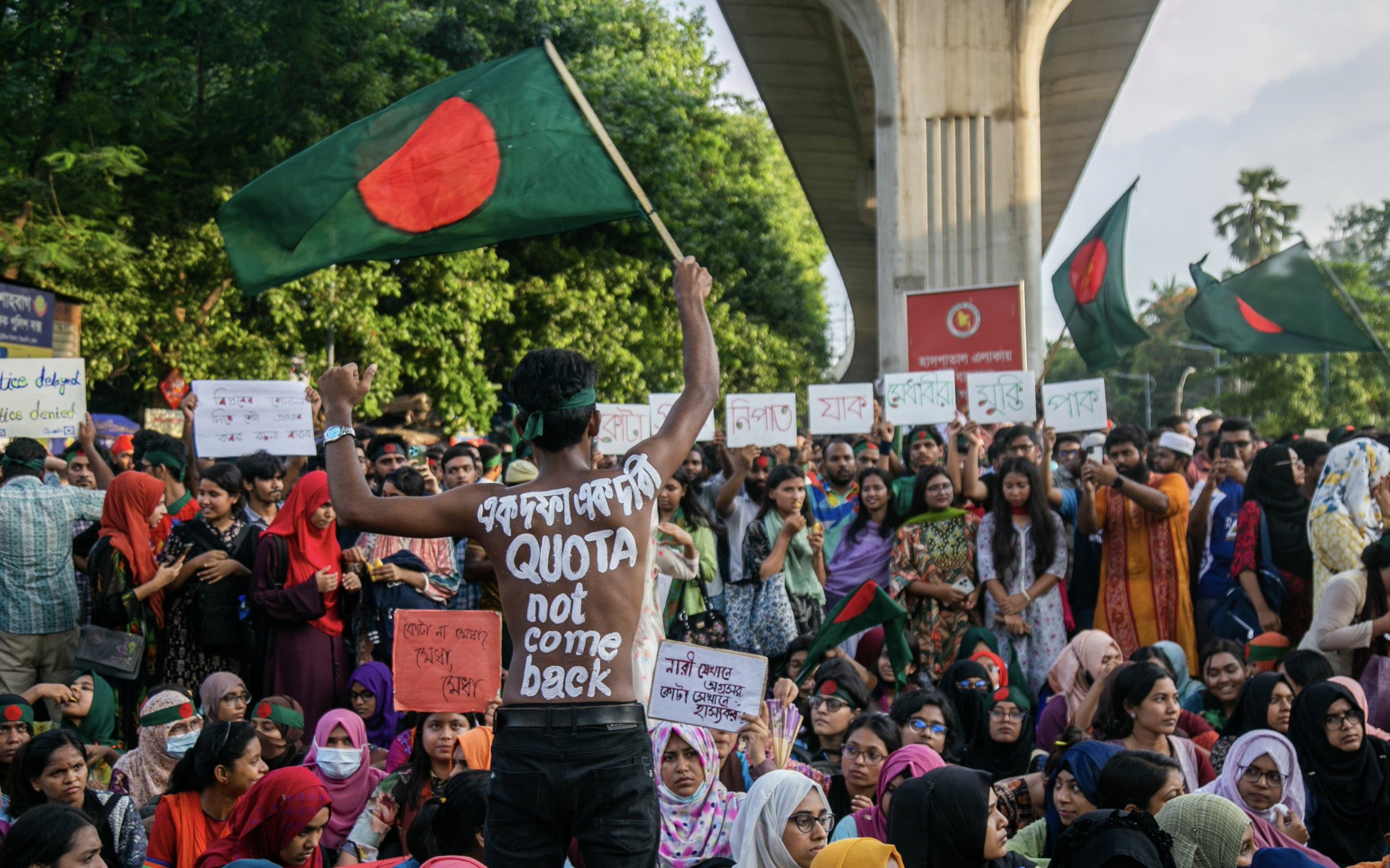
A similar story unfolded in Bangladesh in 2024. What began as a student-led campaign against the government’s job quota system soon transformed into a widespread citizen-led movement. While the protests played out on the streets, social media became their digital backbone, enabling the rapid sharing of information, images, videos, and live updates in real time, ultimately turning a local movement into a global conversation.
The beginning of the movement:
It all began in early July 2024, when the Bangladesh High Court reinstated a quota system for government jobs. The system reserved 30% of government positions for the descendants of freedom fighters who participated in Bangladesh’s 1971 Liberation War. Many students argued that the policy was unfair and undermined the principle of merit, demanding reforms to the quota system.
As demonstrations spread across universities, clashes broke out between protesters and the police. Authorities responded with tear gas, rubber bullets, and mass arrests, further fuelling public outrage. What had begun as a movement for quota reform soon evolved into a nationwide citizen-led protest. With demonstrators eventually demanding the resignation of Prime Minister Sheikh Hasina.
Facebook as the movement’s digital backbone:
Bangladesh is one of Facebook’s largest markets, with approximately 52.9 million users in 2024 out of 77.3 million internet users in the country. This made Facebook one of the movement’s most powerful digital tools. Citizens organised demonstrations through Groups and Events, shared route changes, live-streamed marches, raised donations, and circulated safety updates. More than just a social networking platform, Facebook functioned as a digital operations room for the movement.
Citizen journalism in action:
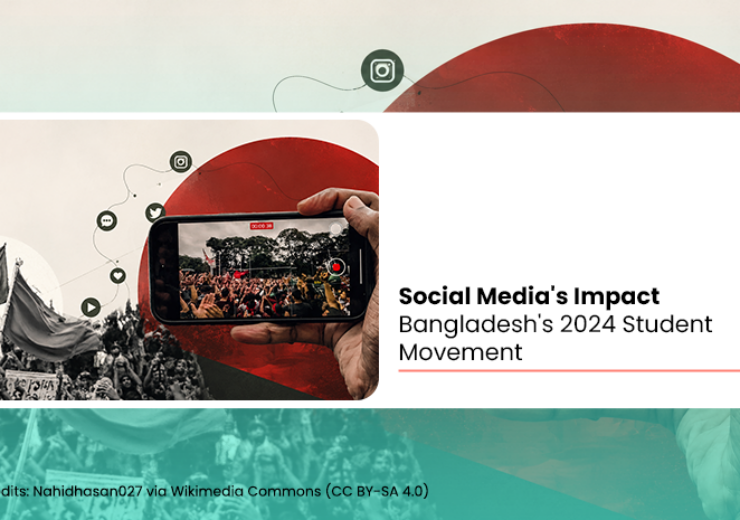
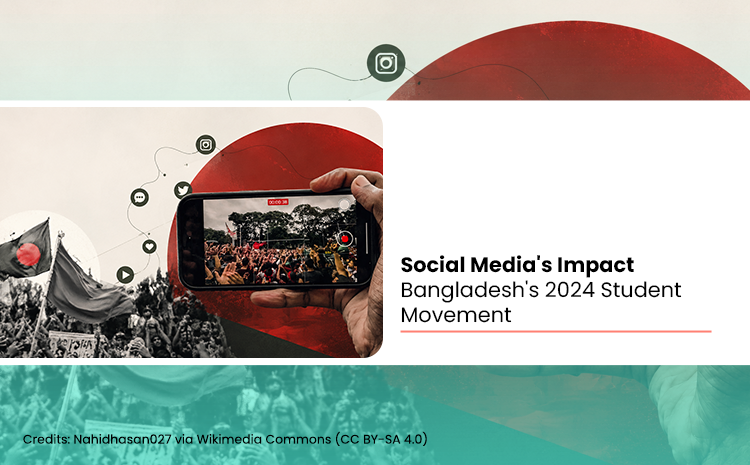
People also took matters into their own hands by documenting events on the ground. Protesters shared live videos, eyewitness accounts, photographs, police movements, and updates from protest sites in real time across Facebook, X, Instagram, and other digital platforms. This wave of citizen journalism bypassed traditional media, offering raw, first-hand accounts that quickly gained traction online. As videos and images were reshared by users, journalists, and international organisations, the movement expanded beyond Bangladesh’s borders and captured global attention.
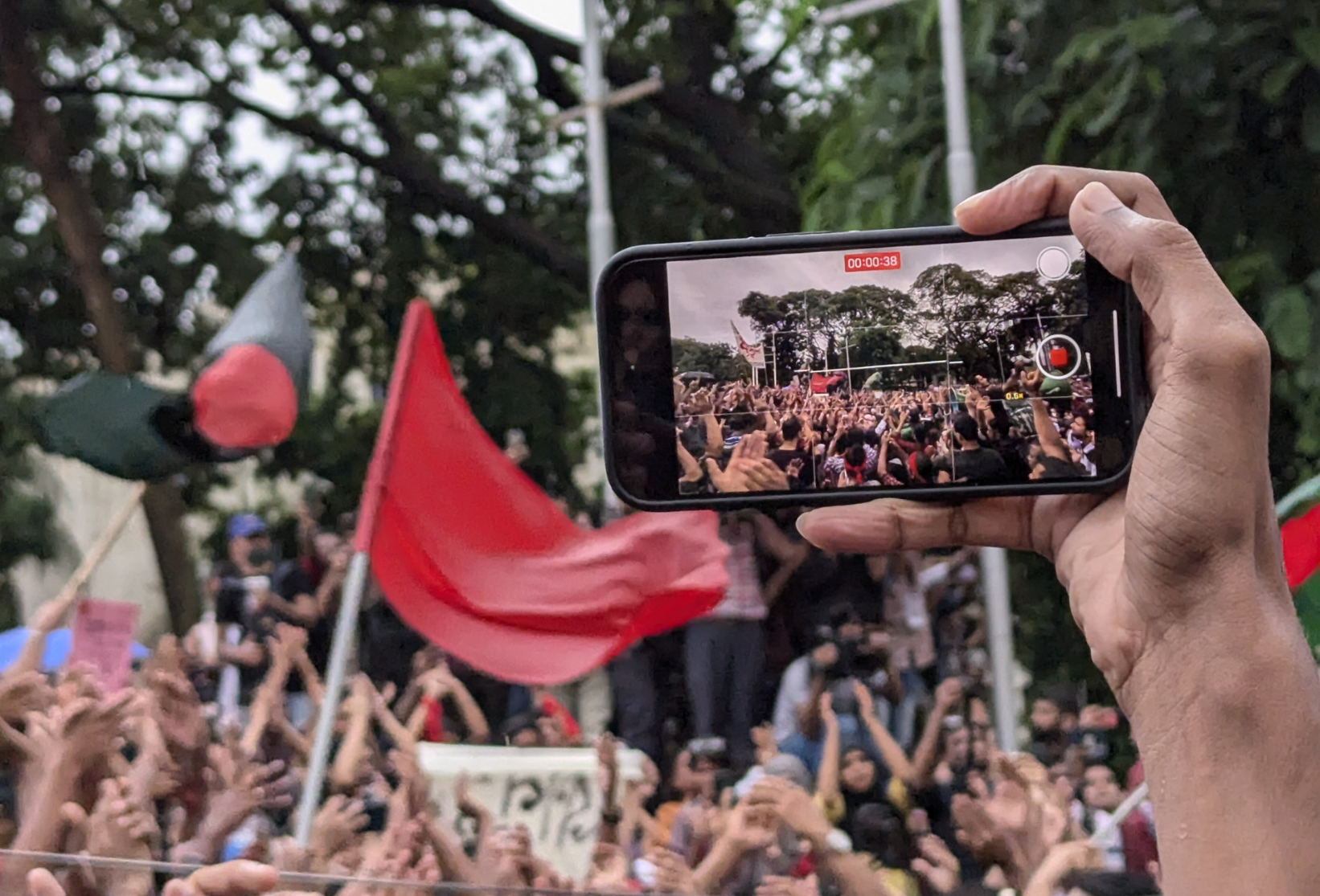
Credits: Nahidhasan027 via Wikimedia Commons (CC BY-SA 4.0)
Defying internet shutdowns:
As the protests intensified, the government suspended mobile internet services and imposed broadband restrictions in an attempt to curb mobilisation. Rather than losing momentum, protesters adapted quickly. Many turned to offline mesh networking applications such as Bridgefy and Briar. Which use Bluetooth and Wi-Fi Direct to enable phone-to-phone communication without internet access. Student coordinators also encouraged residents to keep their home Wi-Fi networks open whenever possible. While portable routers and VPN services such as Proton VPN and Psiphon helped restore connectivity wherever limited signals were available. These workarounds ensured that information continued to circulate, demonstrating how resilient decentralised digital communities can remain even during communication blackouts.
Hashtags that crossed borders:
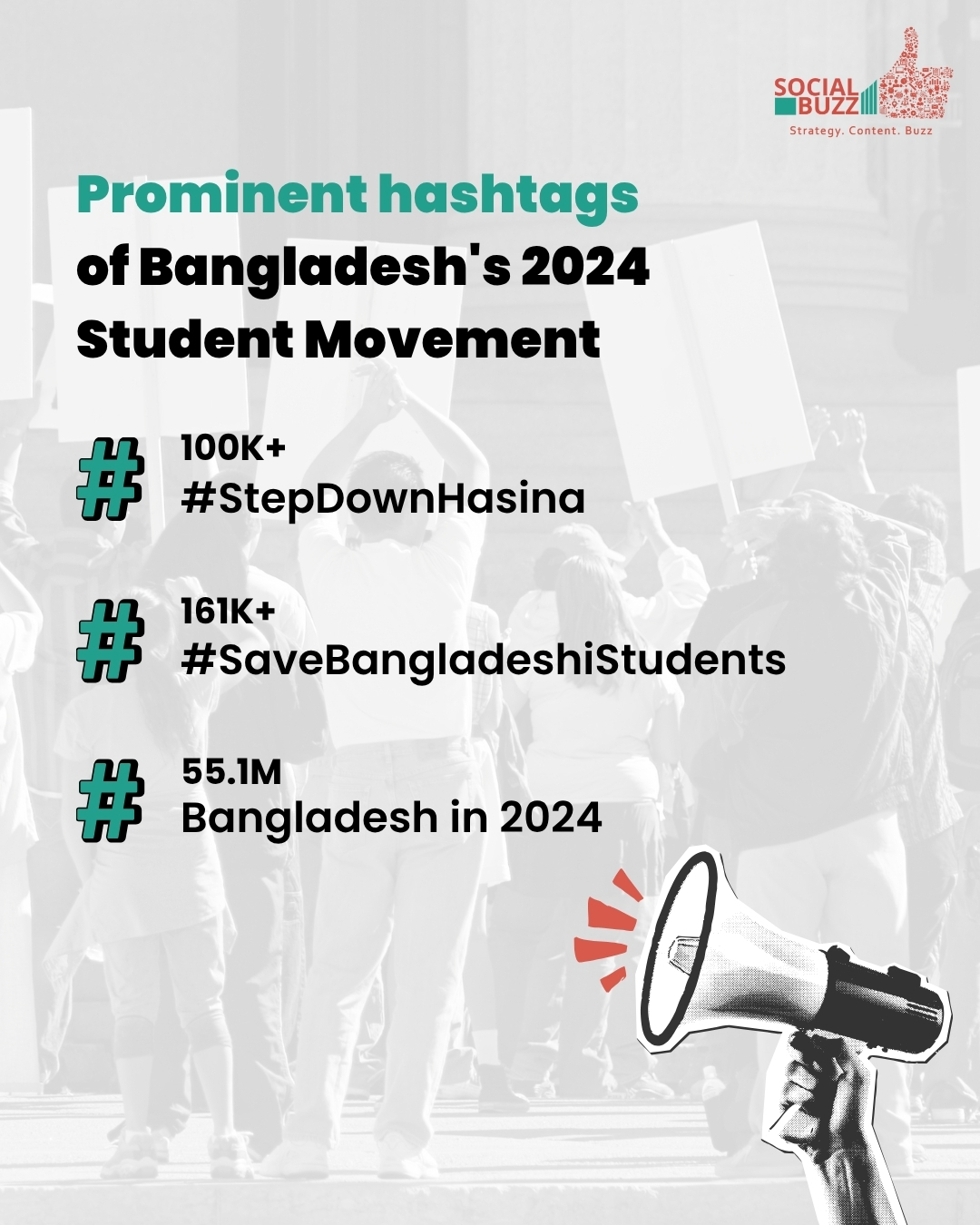
While hashtags helped organise conversations within Bangladesh, they also enabled the movement to cross national borders.
• #SaveBangladeshiStudents became one of the movement’s strongest digital identifiers, with 161K+ Instagram posts.
• Hashtags such as #QuotaReformMovement2024 and #OnePointOneDemand helped unify conversations across platforms.
• #StepDownHasina generated 100K+ social media posts, reflecting massive online engagement.
Support also came from Bangladeshis living in different parts of the world, including the United States, the United Kingdom, Canada, and Australia. Even after internet shutdowns within Bangladesh, diaspora communities continued sharing videos, eyewitness accounts, and updates on social media, ensuring the movement remained visible internationally. Their efforts were instrumental in attracting the attention of global media outlets such as Reuters, BBC, Al Jazeera, and CNN, as well as organisations including Amnesty International and Human Rights Watch. This international visibility increased diplomatic and public pressure, proving that in the digital age, citizen-led movements are no longer confined by geographical borders.
Social media lessons for brands and communicators
This movement demonstrated that communities can amplify a message far more effectively than any centrally managed communication strategy.
• People trusted raw, unfiltered videos shared by ordinary citizens because they offered real-time, authentic accounts of events on the ground.
• Unlike polished institutional communication, user-generated content created a stronger sense of credibility and emotional connection.
• This encouraged more people to engage, share, and participate in the movement.
• The movement also proved that strong digital communities can sustain conversations even during internet restrictions.
• Social media became more than a communication platform. It emerged as a powerful catalyst for collective action.
Conclusion:
The Bangladesh 2024 movement is a powerful reminder that social media has evolved far beyond a platform for entertainment. It has become an ecosystem where information travels instantly, communities organise themselves, and ordinary citizens can shape global conversations. For brands, marketers, and communicators, the lesson is equally clear. Authenticity, community participation, and real time engagement are no longer optional. They are at the heart of impactful digital communication. When people feel connected to a cause, they do not just consume content. They become its creators, distributors, and strongest advocates. Concluding the impact of social media on citizen-led movements
Sources:
About the Author:
Kamakshi Kadhyan is a Journalism and Mass Communication student and a digital marketing intern. She possesses a keen interest in content, branding, and storytelling. She enjoys reading, writing, listening to music, and is always looking for fresh creative ideas.