The Rise of Answer Engines: What Marketing Teams Must Get Right

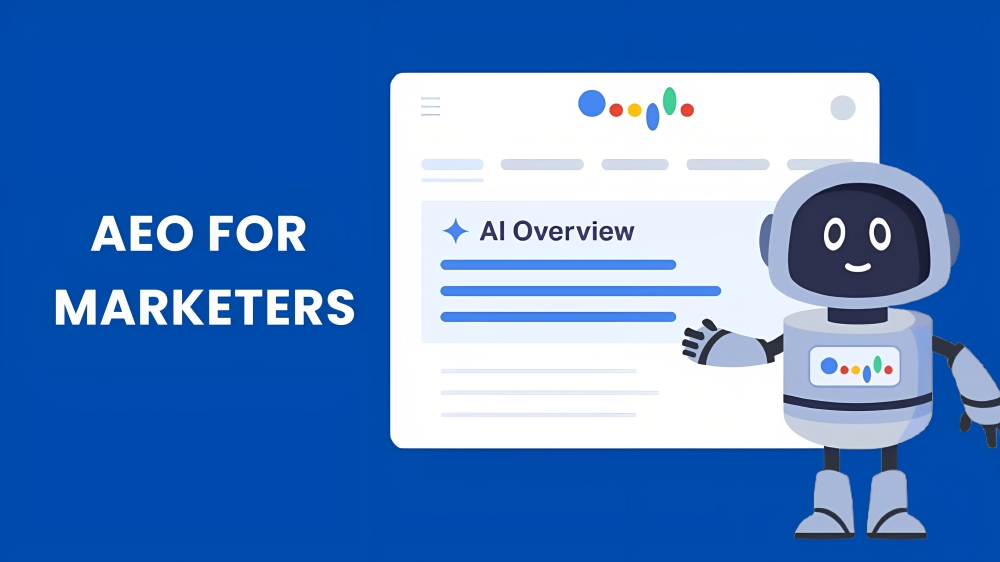
In the fast-evolving digital landscape, a new paradigm is emerging — one where the future of discoverability is not built on traditional web search, but on answer engines powered by artificial intelligence. These systems — like ChatGPT, Google’s AI Overviews, and voice assistants — don’t just return links. They synthesize, cite, and deliver answers. For marketing teams aiming to stay ahead, understanding and mastering Answer Engine Optimization (AEO) is no longer optional; it’s a strategic imperative. In this blog, we’ll analyze how forward-thinking brands can optimize for AEO, why it matters more than ever, and what it takes to build content that AI systems both understand and trust.
What Is Answer Engine Optimization — And Why It Matters
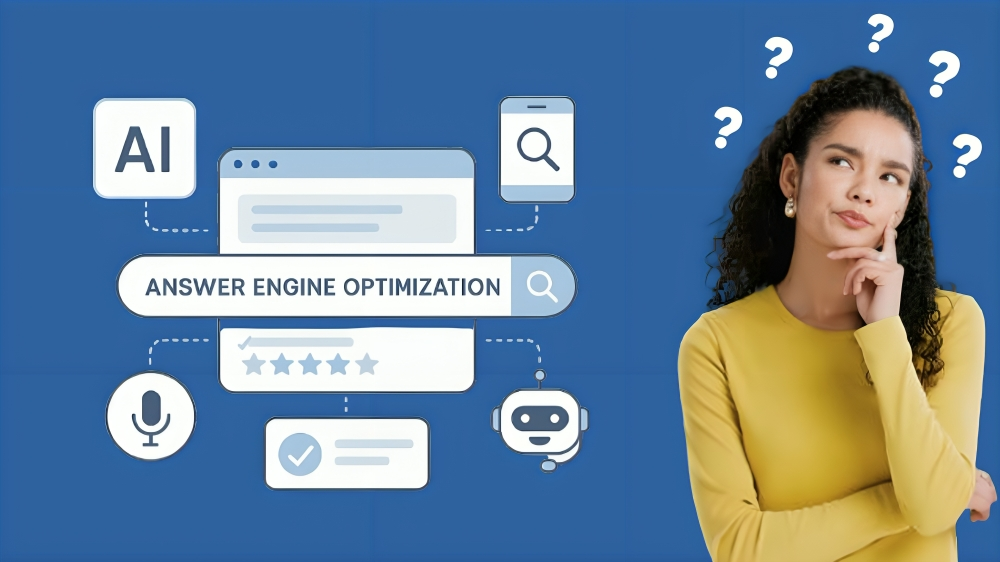
Answer Engine Optimization refers to the practice of structuring and authoring content in a way that AI-driven systems can easily interpret, extract, and cite as authoritative responses. Unlike traditional SEO — which prioritizes page ranks, clicks, and backlinks — AEO prioritizes being the answer, not just a source.
Why does this shift matter now? Because user behavior is rapidly moving away from clicking through a search engine results page. Increasingly, users are turning to voice assistants and AI tools to get direct answers. In this new landscape, visibility means being quoted, not just linked. Brands that optimize for AEO become part of the AI-first conversation, gaining exposure even if a user never visits their website.
Core Principles of AEO for Modern Marketing Teams
1. User Questions Are Your Blueprint
At the heart of effective AEO is a methodical understanding of user intent. Marketing teams must proactively map real user questions — drawing from sources like customer-support logs, sales interactions, and “People Also Ask” data. These queries should be segmented by buyer journey stage: awareness (what is X?), consideration (should I choose X vs Y?), and decision (how do I implement X?). By centering content around actual user questions, you align your content to what AI systems are likely to encounter and cite.
2. Structure Content for AI Comprehension
Answer engines favor content that follows a clear, modular, and logical structure. The future-forward marketer will lead each section with a concise, precise answer (ideally in 40–60 words), followed by richer detail. Each block — definitions, comparisons, how-tos — should be self-contained, making it easy for AI systems to extract exact snippets. Lists, tables, bullet points: these are not just formatting choices; they are semantic signals that make your arguments machine-readable and quote-worthy.
3. Leverage Schema Markup Strategically
To ensure answer engines accurately interpret content, applying structured data is no longer a nice-to-have — it’s fundamental. By using schemas like FAQPage for Q&A content, HowTo for step-by-step guides, Article for thought leadership, and Speakable for voice-optimized snippets, marketing teams can explicitly tell AI systems how to parse information. In addition, the Organization schema helps reinforce brand identity as a trusted, authoritative source. Deploying templates via your CMS or JSON-LD ensures this won’t be a bottleneck — but rather a scalable asset.
4. Target Featured Snippets and “People Also Ask.”
One of the most effective ways to gain traction with AEO is to win Google’s Featured Snippets and PAA boxes — because these formats often serve as the training data for AI overviews. To achieve this, content creators must mirror the structure of existing answers: if the snippet is a numbered list, your answer should be too; if it’s a paragraph, lead with a short, crisp explanation. Headings should replicate the exact question, and your answer should be placed early in the content, potentially within the first scroll. Rather than constantly generating new pages, you can often optimize existing high-authority pages to capture these AI-driven moments.
5. Build and Sustain Credibility
In an AI-first era, trust and authority are currency. To maximize your chances of being cited, your content must rest on a foundation of evidence — data, expert quotes, reputable sources. But that’s not enough: AI engines also reward freshness. Marketing teams must take ownership of their AEO content and keep it updated. Regularly refreshing answers in response to evolving user questions, new research, or shifting market trends ensures your content remains relevant — and continues to be cited.
6. Optimize for Voice and Local Queries
Voice assistants represent a critical vector for AEO. When users ask a smart speaker a question, they don’t read — they listen. That means content optimized for voice must be crisp, natural-sounding, and free from ambiguity. Using the Speakable schema ensures your content is flagged for voice AI, and writing in conversational language helps your brand be the one read out loud. For local businesses, this is doubly important: structured local data (NAP consistency, Google Business Profile accuracy, customer reviews) can dramatically boost your chances of being cited in voice responses.
7. Measure, Iterate, and Evolve
AEO success does not always show up in traditional analytics. When AI systems cite you, it may not generate the same web traffic metrics as clicks from search results. This requires a new measurement mindset: manually query your target questions across AI platforms (ChatGPT, Perplexity, Google AI) and log when and how your brand appears. Use proxy metrics — share of voice in Featured Snippets, PAA presence, and branded search volume — to assess your AEO reach. Tools like HubSpot’s AI Search Grader can provide a baseline and track progress. Over time, refine your content based on which formats and topics earn the most AI traction.
Overcoming AEO Adoption Challenges
Transitioning to AEO is not without its headwinds. Many organizations struggle with internal buy-in: executives may hesitate to invest in visibility that doesn’t show up as web traffic. The key is to reframe AEO as brand leadership in the AI era — being cited, shaping perception, and influencing discovery beyond clicks.
Another frequent hurdle is attribution. Traditional metrics break down because AI citations don’t map to Google Analytics, so ROI feels murky. The solution lies in building hybrid measurement frameworks: combine AI visibility tracking with surveys, branded search lift, and downstream business impact.
Then there’s the technical barrier: schema is unfamiliar to content creators, and engineering resources may be limited. The fix? Create reusable schema templates, work with SEO or dev teams to standardize them, and validate with simple tools like Google’s Rich Results Test.
Finally, AEO is not static. AI models evolve, citation behavior changes, and discovery systems shift. The right approach is to anchor your strategy in timeless principles — structure, clarity, authority — rather than chasing every engine’s quirks. This makes your content resilient, valuable, and future-ready.
Also Read: Job Search Over 50: How to Optimize Your LinkedIn Profile and Personal Brand
Conclusion
The rise of answer engines marks an inflection point — a shift from click-centric visibility to answer-centric influence. For marketing teams, this isn’t just another channel: it’s a new dimension of brand presence where trust, clarity, and structure define success. By mapping user intent, structuring content for extraction, applying schema, and continuously optimizing for AI visibility, you position your brand to be the answer in an increasingly AI-driven world. In this future, the companies that don’t just rank — but are cited — will hold the most power. Embrace AEO today, and secure your place at the center of tomorrow’s information economy.
FAQ’s Section
1. How can regular LinkedIn updates improve AEO visibility?
Frequent LinkedIn updates signal freshness and brand activity, which helps AI systems recognize your profile as current and authoritative. Sharing knowledge posts, case studies, or thought leadership articles with clear, structured insights can increase the chance of your content being cited by answer engines.
2. Why should website updates focus on structured data for AEO?
Consistent website updates using structured data like FAQPage, Article, or Organization schema make your content more comprehensible to AI crawlers. These updates help answer engines extract precise information, improving your chances of appearing in featured snippets or AI overviews.
3. What’s the link between LinkedIn content and website AEO performance?
LinkedIn posts act as discoverable entry points for AI models. By linking recent website articles or resources in your posts and using consistent brand schema on your site, you reinforce authority signals that boost both your LinkedIn content and website visibility in AI-powered search.
4. How often should brands update their website content for AEO?
Brands should refresh website pages every 3–6 months to maintain authority and accuracy. Regular updates — especially for FAQs, resource pages, or blog content — help AI systems trust your information as current, increasing your visibility in answer engine citations.
5. What type of LinkedIn updates support AEO best?
Short, question-led posts that summarize insights in 40–60 words work best for AEO. When you structure posts to answer specific audience questions — such as “How can businesses optimize for AI search?” — AI systems can extract and reference them more effectively.
Author





Comment (01)