
TRP Ep 6: The Digital Impersonation Wave — When Global Icons Had to Sue AI


Remember during college festivals when someone on the student council would do a spot-on mimicry of the college principal or HOD? The voice, the walk, the hand gestures—everything was so accurate that for a few seconds, people actually panicked. It was hilarious because everyone knew it was just harmless mimicry on stage.
Now imagine someone taking your voice, your face, and your trademark expressions, feeding them into a generative AI tool, and plastering synthetic videos of you across millions of screens without your consent.
That is the alarming reality of celebrity AI deepfakes and personality rights, a documented crisis that has pushed both global pop icons and Bollywood royalty into emergency legal battles.
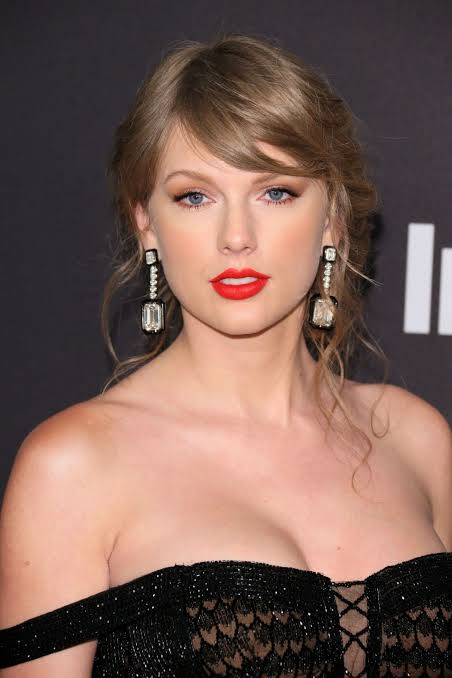
The scale of this issue exploded globally in early 2024 when a wave of non-consensual, sexually explicit AI-generated images of Taylor Swift flooded X (formerly Twitter). Perpetrators bypassed text-to-image safety guardrails using creative prompt workarounds on public platforms. Within hours, a single synthetic post generated tens of millions of views. The situation escalated so rapidly that X had to take the extreme step of temporarily blocking searches for “Taylor Swift” across its entire global platform, while lawmakers and the White House issued official calls for federal legislation.
From Hollywood to Bollywood: The Fight for Personality Rights
While the Taylor Swift incident made headlines in the West, Indian courts were already setting major legal precedents to tackle digital impersonation.
Long before deepfakes became a household word, Bollywood veteran Anil Kapoor moved the Delhi High Court to protect his likeness, voice, image, and even his iconic catchphrase “Jhakaas” from being exploited by generative AI tools, morphing apps, and unauthorized commercial bots. The court stepped in with a landmark ex-parte injunction, stating clearly that a person’s name, voice, and persona carry commercial value and cannot be hijacked without consent.
Impact on Bollywood
Soon after, Jackie Shroff approached the court to restrain unlicensed AI chatbots and content creators from monetizing his distinct voice, style, and popular monikers. Even Amitabh Bachchan had previously secured a landmark order protecting his unmistakable baritone from being cloned by unauthorized AI voice software.
These aren’t celebrity vanity projects. They are real-world legal battles against digital identity theft. It feels like the plot of Duplicate or Fan, where the fictional lookalike steps into real life—except here, the duplicate is an algorithmic clone created in a few seconds on a laptop.
Why Digital Identity Rights Matter for Every Business Leader
Fortunately, the swift judicial interventions in India and the global push for strict watermarking and takedown mandates show that the legal system is evolving to protect digital identity.
While these cases involve mega-celebrities, the business lesson hits much closer to home. If an algorithm can clone a global pop star or mimic a veteran actor’s voice, it can just as easily replicate an agency founder’s video pitch. Additionally, it may be able to clone a CEO’s voice note for a fake vendor invoice, or impersonate a brand’s executive team in a phishing campaign.
Instead of stepping back from digital media, this is our cue to build proactive identity defenses. Forward-thinking companies are already implementing cryptographic content credentials, adopting strict voice-and-video verification channels for key financial decisions, and registering their digital IP.
Read our previous edition of The Rogue Prompt TRP Ep 3: How AI Deepfakes Rewrote Corporate Risk
These incidents remind me of the early internet, which pushed us to protect domain names and trademark logos. Now, the generative AI era is pushing us to treat digital persona and voice as critical assets that require proactive governance.
How is your brand thinking about digital persona rights and synthetic media safeguards? Let us connect and start the conversation in the comments!
Sources
- MIT AI Risk Database: Incident 632 — Viral Proliferation of Synthetic Non-Consensual Deepfakes on X
https://airisk.mit.edu/ai-incidents/632-significant-increase-in-deepfake-nudes-of-taylor-swift
- Georgetown Law Technology Review: Deepfakes, Consent, and Changing Legal Landscapes
https://www.law.georgetown.edu/gender-journal/online/volume-xxv-online/taylor-swift-deepfakes-and-the-first-amendment-changing-the-legal-landscape-for-victims-of-non-consensual-artificial-pornography/
https://indiankanoon.org/doc/171545464
- SpicyIP Legal Analysis: Jackie Shroff Personality Rights Order and the Protection of Digital Personas in Indian Courts
Author





This kind of thing has really gotten out of hand. It’s good that so many people known to look out for it now, but there are so many who still get fooled.
I agree with Beth, it has really gotten out of hand, ugh! It’s unsettling how real deepfakes can look and sound. This is a good reminder to slow down and check where a video came from before passing it along.