How Coca-Cola turned a sarcastic phrase into an award-winning campaign
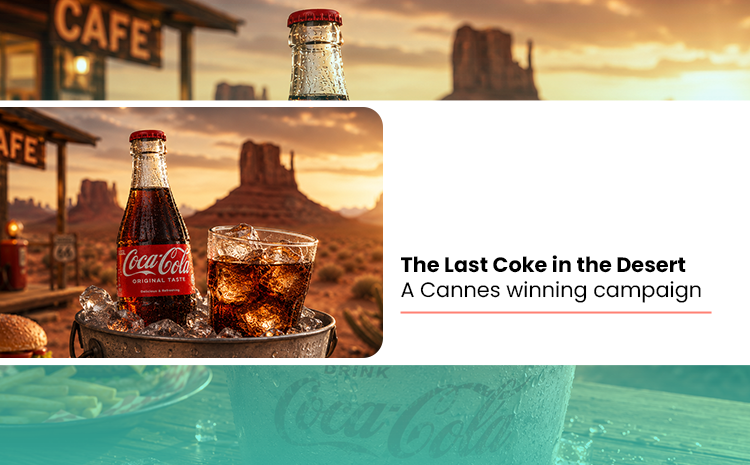
Coca-Cola recently marked 100 years in Mexico, but instead of celebrating its own legacy, the brand chose to celebrate the people who quietly built it over the decades. Rather than centering the campaign around itself, The last coke in the desert shifted the spotlight to the unsung heroes who keep Coca-Cola within reach, even in some of Mexico’s most remote regions. What made the campaign even more remarkable was its inspiration, a popular Mexican phrase with a predominantly negative meaning, one that most brands would hesitate to associate with. Instead of avoiding it, Coca-Cola redefined it, turning it into one of the most talked-about campaigns of the year.
The phrase behind the last coke in the desert:
La Última Coca-Cola del Desierto—translated as ‘The Last Coke in the Desert is a well-known Mexican expression used to mock someone who believes they are more important than everyone else. It is often directed at people who are perceived as arrogant, entitled or narcissistic with remarks like “He thinks he’s the last Coke in the desert.” Over time, the phrase became deeply embedded in everyday conversations and carried a meaning that was anything but positive.
For most marketers, building a campaign around such an expression would be a risky move. Associating a brand with a phrase carrying negative cultural connotations could easily confuse audiences or even backfire if they misunderstood its intended message. Yet, instead of distancing itself from the expression, Coca-Cola saw an opportunity hidden within it, one that would completely redefine what ‘The Last Coke in the Desert’ meant.
Turning a cultural expression into a brand story:
Rather than using its centenary to celebrate itself, Coca-Cola asked a different question: Who made these 100 years possible? The answer wasn’t the brand alone, but the independent shopkeepers who have kept Coca-Cola within reach in every corner of Mexico, including some of its most remote desert communities.
VML, the creative agency behind the campaign, recognised that while La Última Coca-Cola del Desierto was commonly used as a sarcastic expression, it also carried a powerful literal meaning. In the middle of the desert, a cold bottle of Coca-Cola is rare, refreshing, and memorable, but that experience is only possible because of the people who make it available. Instead of changing the phrase, the campaign changed who it represented.
Through the stories of Noemí, who patiently waits for travellers with her daughters in the desert, Pedro, who welcomes visitors to his small restaurant, and Mario and Agustín, who run a grocery store far from urban convenience, Coca-Cola transformed ordinary shopkeepers into the true “Last Cokes in the Desert” people whose resilience, dedication, and service have quietly kept communities connected for generations.
Bringing the “The Last Coke in the desert” campaign to life:
To bring this idea to life, VML deliberately moved away from polished advertising and opted for a documentary-style film. Rather than relying on actors or scripted narratives, the campaign featured the very people who inspired the idea, allowing audiences to witness their everyday lives with authenticity. This approach made the campaign feel less like a commercial and more like a tribute to communities that are often overlooked.
Filmed across the harsh landscapes of the Sonoran Desert and Baja California, the three-minute film captures the realities of running a small business in regions defined by extreme heat, isolation, and limited resources. Whether it is Noemí patiently waiting for passing travellers, Pedro welcoming visitors into his restaurant, or Mario and Agustín keeping their grocery store running despite the challenges of remote living, each story reinforces the resilience required to serve communities where even basic conveniences can be difficult to access.
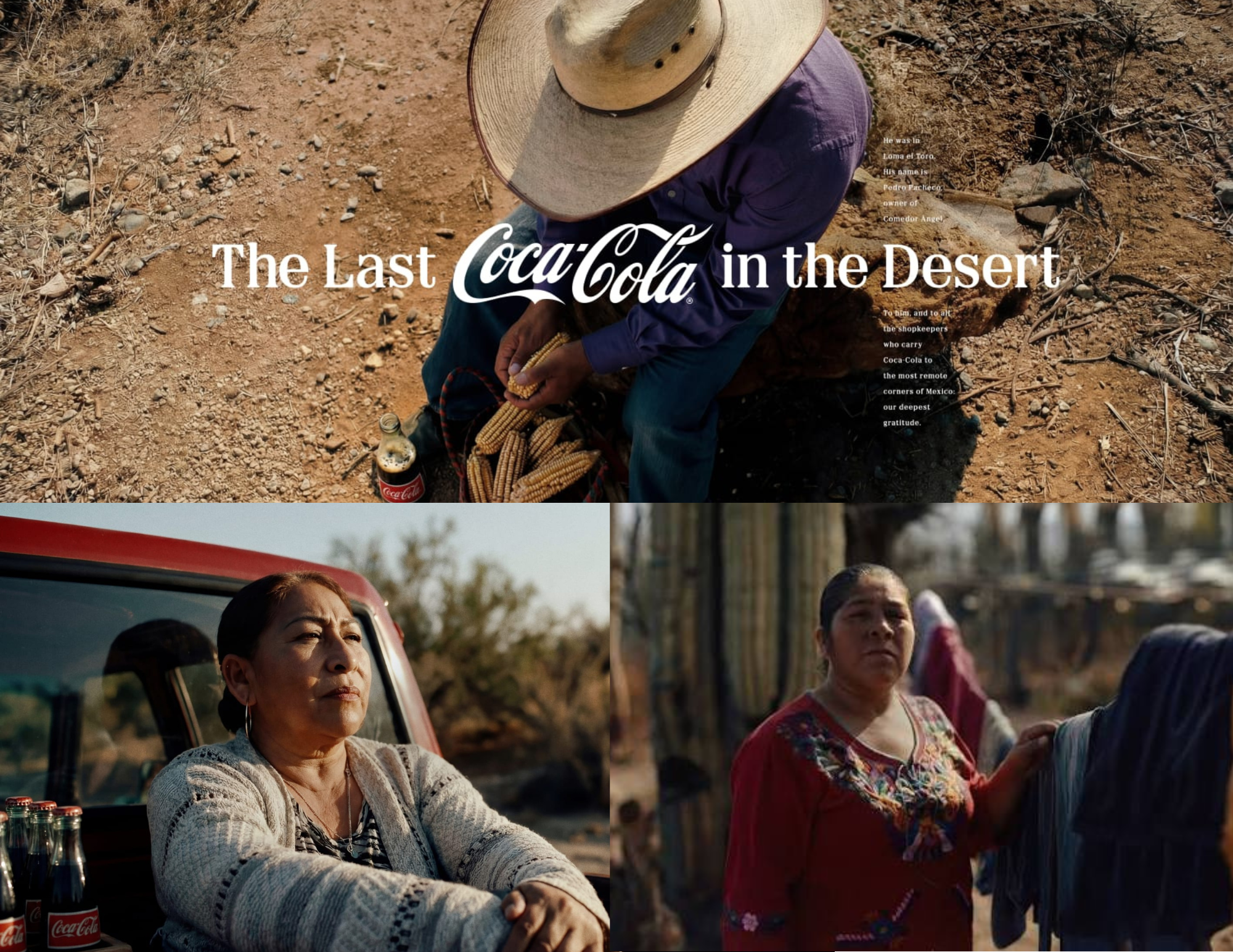
The campaign extended beyond storytelling by formally recognising these shopkeepers as “The Last Cokes in the Desert”, transforming a phrase once used sarcastically into a title of honour. Instead of celebrating a product, Coca-Cola celebrated the people who make that product available every day, proving that even the smallest neighbourhood stores play a vital role in the brand’s century-long journey across Mexico.
Why the campaign worked:
The campaign became award-winning and so successful because it used emotional and cultural marketing. Brands usually try to create slogans that are catchy and leave a lasting impression on their memory. In this campaign the phrase used was something that people had been saying for decades, which made it instantly familiar and emotionally resonating.
It celebrated the ecosystem and maintained gratitude through the people-first branding. By targeting to evoke emotions in viewers; that’s why it showcased community, resilience and consistently making the bottle a symbol rather than a product. The campaign remained deeply rooted in Mexican culture, using the local language as its narrative voice and showcasing stories through a distinctly Mexican perspective, yet it resonated with audiences across the world. That’s how powerful their emotional marketing and branding were.
The campaign received widespread recognition and went on to win at the Cannes Lions, the global benchmark for creative excellence in advertising, marketing, and communications. According to VML records , it reached 10.3 million people within the first week, generated three times more social conversations, and achieved a 99% positive sentiment driven by national pride. It proved that a locally rooted idea can achieve global recognition.
Check out other Advertising campaigns
Conclusion:
Overall, Coca-Cola’s campaign proved that brands don’t always have to be the hero of their own story. Instead, by celebrating the people behind its success, it created a campaign that was both culturally relevant and emotionally impactful. It serves as a great example of how emotional branding can reach its full potential when rooted in authenticity. More importantly, it demonstrates that a simple cultural insight, when executed thoughtfully, can resonate with audiences across the world and leave a lasting impact.
SOURCES :
- VML – *The Last Coke in the Desert* (Campaign Case Study)
- The Coca-Cola Company – *Coca-Cola Wins at Cannes Lions 2026*
- Cannes Lions – Official Website
- VML – Official Website
- WPP – Official Website
- The Coca-Cola Company – Official Website
ABOUT THE AUTHOR:
Kamakshi Kadhyan is a Journalism and Mass Communication student and a digital marketing intern. She possesses a keen interest in content, branding, and storytelling. She enjoys reading, writing, listening to music, and is always looking for fresh creative ideas.
Author