
The $5 Trillion Idea Nobody Understands


When most people hear “metaverse,” three things come to mind.
Mark Zuckerberg’s awkward cartoon avatar floating in a virtual meeting room. A teenager in headgear shooting things in a game. And a lot of very expensive hype that never quite delivered.
That picture is not wrong. But it is dangerously incomplete.
The metaverse is not a product. It is not owned by Meta. It is not a game. And you absolutely do not need a headset to be inside it.
The metaverse is the next layer of the internet — one where instead of reading a flat screen, you exist inside a three-dimensional space and actually do things there. Think of the difference between looking at a photograph of a city and walking through that city. That is roughly the difference between the internet you use today and the metaverse.
Stephenson himself said it best in a 2022 interview: “I don’t believe that most people will access the metaverse using goggles or glasses. I think billions of people who are already familiar with 3D gaming interfaces — that’s how they’re going to do it.”
A phone. A laptop. A regular screen. That is all it takes to be inside a metaverse today.

How We Got Here: A Ridiculously Brief History
1992 — Neal Stephenson coins the word “metaverse” in Snow Crash. Silicon Valley reads it obsessively for the next three decades.
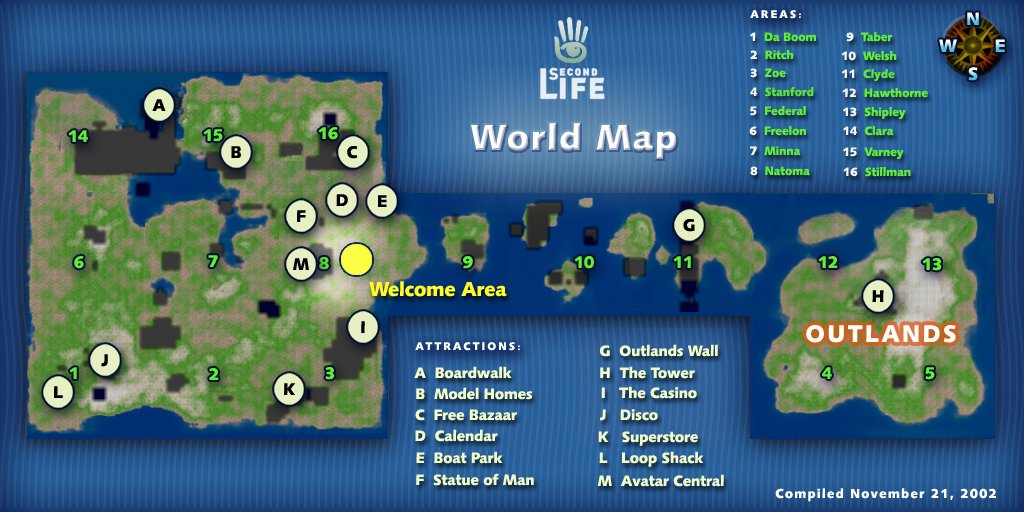
2003 — Second Life launches. For a brief, glorious moment, people hold virtual concerts, run digital businesses, and buy virtual real estate. Then it gets too clunky and fades. But the proof of concept is there.
2006–2016 — Gaming worlds explode. World of Warcraft, Minecraft, Fortnite. Hundreds of millions of people are already living partially digital lives — owning things, building things, meeting friends — inside virtual worlds. Nobody calls it the metaverse yet.
2021 — Facebook renames itself Meta. The word goes mainstream overnight. Zuckerberg announces his vision of a fully immersive virtual world and commits billions to building it. The tech world goes wild. Investors pour $120 billion into metaverse-related technology in a single year — more than double the $57 billion invested in all of 2021.
2022 — McKinsey publishes Value Creation in the Metaverse, estimating the metaverse economy could reach $5 trillion by 2030 — roughly the size of Japan’s entire GDP. The world’s most rigorous management consultancy is not in the business of guessing.
2023–2024 — Meta’s Reality Labs division posts staggering losses — $10.2 billion in 2021, $13.7 billion in 2022, $16.1 billion in 2023, $17.7 billion in 2024. By 2025, cumulative losses cross $70 billion. Meta slashes its metaverse budget by 30% and pivots toward AI glasses. The consumer metaverse, as Zuckerberg imagined it, has stalled.
But here is the plot twist. While Meta’s avatar world was failing, something else was quietly succeeding. Governments. Cities. Industrial companies. They were building metaverses that worked — not for entertainment, but for actual life. We will come to that. For now, let us understand the engine underneath all of this.
The Six Technologies That Make the Metaverse Work
You do not need to be an engineer to understand this. Think of it as six ingredients in a recipe.
1. 3D Rendering and Spatial Computing This is the kitchen — the technology that builds three-dimensional spaces a human brain reads as “real” rather than “flat.” Powered by game engines like Unreal Engine (Epic Games) and Unity. These are the same tools used to build the most photorealistic video games and Hollywood visual effects.
2. Artificial Intelligence AI does two things in the metaverse. It generates content — buildings, landscapes, characters — at a speed no human team could match. And it personalises the experience — learning what you need and surfacing it before you ask.
3. Real-Time Networking This is what lets thousands of people exist in the same virtual space simultaneously — talking, moving, transacting — without lag. The same infrastructure that powers online gaming at scale. 5G makes this dramatically faster and more stable.
4. Digital Twins A digital twin is an exact virtual replica of a physical thing — a building, a machine, an entire city — that updates in real time as the physical thing changes. This is the technology that makes a city metaverse genuinely useful rather than decorative.
5. Blockchain and Digital Ownership This is what makes virtual assets real. If you own something in the metaverse — a piece of virtual land, a document, a credential — blockchain makes that ownership verifiable, transferable, and permanent. No single company can delete it.
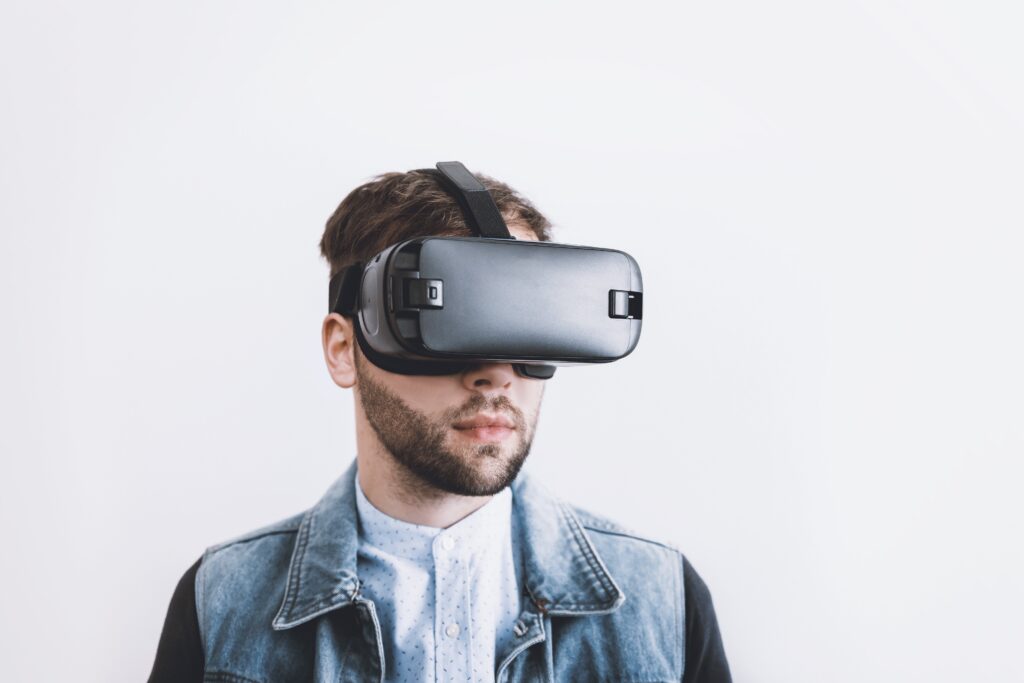
6. Immersive Interfaces This includes VR headsets (for full immersion), AR glasses (for overlay on the real world), and — crucially — ordinary smartphones and computers. The first two get the headlines. The third is how a billion people will actually use the metaverse.
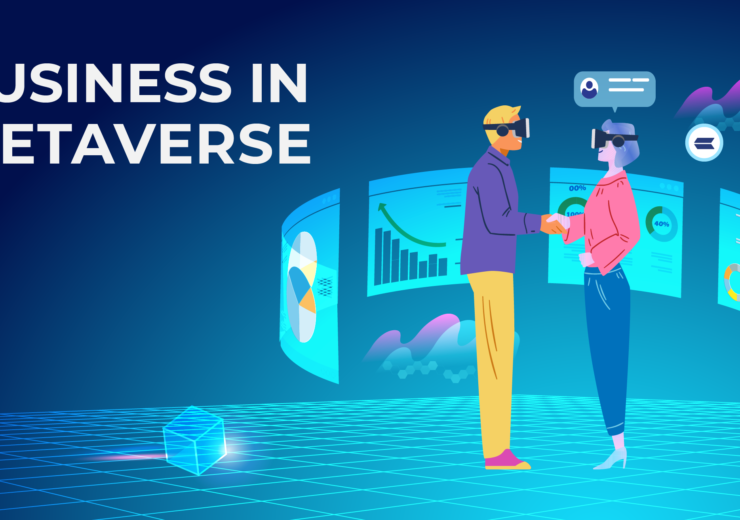
Check out our blog post on Business in Metaverse
Together, these six technologies are converging at the same moment. That convergence is what makes this decade different from every previous moment when someone declared the metaverse was about to arrive.
9 Companies Building the Metaverse Right Now
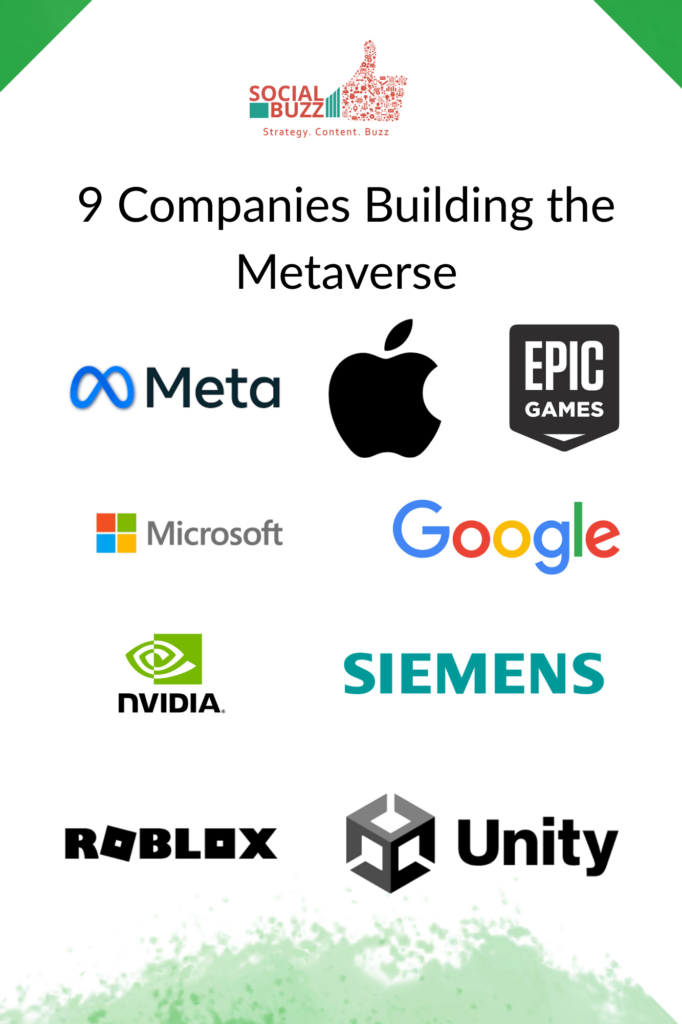
These are not the only players. But they are the ones whose decisions will shape what the metaverse looks like for the next decade.
Meta — The largest single investor in metaverse infrastructure globally. Despite Reality Labs’ losses, the Quest headset remains the most widely used VR device in the world. Their bet is that the hardware eventually gets cheap enough to go mainstream. Jury still out.
Microsoft — The enterprise metaverse. Microsoft Mesh brings avatar-based collaboration into Teams. Their $69 billion acquisition of Activision Blizzard was partly a metaverse land grab — Minecraft alone has 170 million monthly active users.
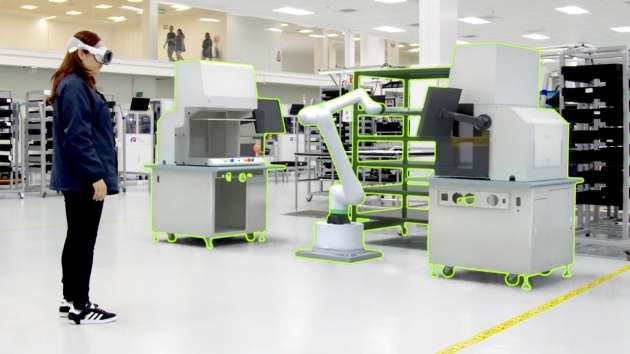
NVIDIA — The company that makes the chips that power everything. Their Omniverse platform is the metaverse for engineers and industrial companies — a place where factories, cities, and infrastructure are designed, tested, and run virtually before anything is built physically.
Epic Games — The creators of Unreal Engine and Fortnite. Quietly one of the most important metaverse companies in the world. Their $2 billion investment from Sony and LEGO in 2022 was explicitly to build a metaverse for all ages.
Apple — The late mover with the deepest pockets. Vision Pro, launched in 2024, is the most sophisticated mixed reality device ever built. Apple’s play is not gaming — it is spatial computing for work, creativity, and eventually, daily life.
Google — Present through Android (the operating system most metaverse apps run on), Google Maps (the spatial data backbone), and ongoing AR development. Quietly foundational.
Roblox — 97.8 million daily active users. Mostly young. Entirely user-generated. The largest existing metaverse by active engagement and the clearest proof that people will build and inhabit virtual worlds if the tools are accessible.
Unity Technologies — The other major game engine. Powers more than 70% of the world’s mobile and AR/VR applications. If NVIDIA’s Omniverse is the industrial metaverse, Unity is the consumer and developer one.
Siemens — The most important company most people do not associate with the metaverse. Their industrial metaverse — digital twins of factories, cities, and infrastructure — is where the real-world impact is already happening. Their partnership with NVIDIA on Omniverse is reshaping how the world builds things.
Why All of This Matters Right Now
Here is what the numbers tell us, plainly.
The global metaverse market was valued at $105.4 billion in 2024 and is projected to reach $936.6 billion by 2030, growing at a CAGR of 46.4%. Grand View Research
McKinsey estimates the metaverse could generate up to $5 trillion in value by 2030 McKinsey & Company — roughly the size of Japan’s entire GDP.
Meta has already lost more than $70 billion on its version of the metaverse. That is not a failure of the technology. That is a failure of one company’s specific approach to it. The infrastructure, the engines, the networks, the AI — all of it is still being built, and none of it goes away because Zuckerberg had a bad decade.
What is coming next is not the gaming metaverse Meta promised. It is something more serious and more useful.
Cities are building virtual civic spaces where citizens access government services from their phones at midnight. Industries are running digital factories that predict failures before they happen. Governments are reconstructing heritage sites destroyed by conquest and time. Universities are teaching students who cannot reach physical classrooms.
The metaverse that matters — the one worth $5 trillion — is not entertainment.
It is infrastructure.
And the countries, cities, and companies that understand that distinction are the ones that will shape what the next decade looks like.
Sources and Verified Links
- Neal Stephenson coins “metaverse” in Snow Crash (1992) — CNBC: https://www.cnbc.com/2021/11/03/how-the-1992-sci-fi-novel-snow-crash-predicted-facebooks-metaverse.html
- Stephenson on goggles not being required for metaverse access — ISM Guide: https://ismguide.com/neal-stephenson-takes-aim-at-mark-zuckerberg/
- Global metaverse market $105.4 billion in 2024, projected $936.6 billion by 2030 at 46.4% CAGR — Grand View Research: https://www.grandviewresearch.com/industry-analysis/metaverse-market-report
- $120 billion invested in metaverse in 2022, double the $57 billion in 2021 — McKinsey Value Creation in the Metaverse: https://www.mckinsey.com/capabilities/growth-marketing-and-sales/our-insights/value-creation-in-the-metaverse
- McKinsey: metaverse could generate up to $5 trillion in value by 2030 — McKinsey.com: https://www.mckinsey.com/capabilities/growth-marketing-and-sales/our-insights/a-ceos-guide-to-the-metaverse
- Meta Reality Labs losses — $10.2B (2021), $13.7B (2022), $16.1B (2023), $17.7B (2024) — TechCrunch: https://techcrunch.com/2023/02/03/metas-reality-labs-lost-13-7-billion-on-vr-and-ar-last-year/ and Statista: https://www.statista.com/chart/29236/operating-loss-of-metas-reality-labs-division/
- Meta cumulative Reality Labs losses exceed $70 billion, 30% budget cut — Yahoo Finance: https://finance.yahoo.com/news/meta-platforms-lost-73-billion-165823364.html
- Roblox 97.8 million daily active users Q1 2025 — Mordor Intelligence: https://www.mordorintelligence.com/industry-reports/metaverse-market
Author





How does The $5 Trillion Idea Nobody Understands impact readers or the community today?