How to Use LinkedIn for B2B Social Selling

LinkedIn has become the cornerstone platform for B2B marketers and sales professionals aiming to scale meaningful relationships and drive business results. Unlike other social platforms that favor casual interactions, LinkedIn is deliberately built as a professional ecosystem where credibility, trust and expertise matter. To succeed here, B2B social selling isn’t about pushing a sales pitch into someone’s inbox but about building relationships that organically convert into opportunities, deals and long-term partnerships.
In this blog, let me explore the proven strategies to leverage LinkedIn for B2B social selling, with a special focus on personal and visual branding, especially how banner images and profile visuals can set the tone for your expertise even before you start a conversation.
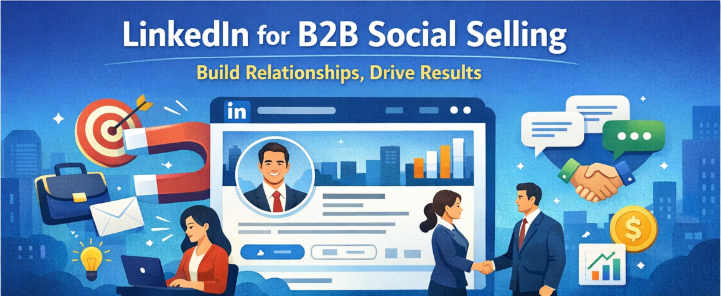
What Is B2B Social Selling?
At its core, social selling on LinkedIn means using content, engagement and networking tools to build stronger trust with your ideal prospects long before a sales pitch is made. It’s a strategic shift from traditional outreach to establishing relevance and authority in your niche by focusing on relationships and problem-solving.
Social selling isn’t about blasting sales messages. Instead, it involves:
- Identifying the right prospects
- Building rapport via consistent value creation
- Engaging authentically on posts and in messages
- Moving relationships offline when the timing is right
This approach results in higher conversion rates and more sustainable business relationships because prospects choose to work with you rather than being aggressively targeted.
Why LinkedIn Is a Top Channel for B2B Social Selling
LinkedIn has become indispensable for B2B due to its professional nature and decision-maker audience. Unlike other platforms, users on LinkedIn are actively thinking about:
- Career progression
- Problem solving
- Industry insights
- Business partnerships
These user intentions make LinkedIn uniquely suited for social selling because your audience is already in a professional mindset. It’s a platform where connections can turn into conversations, and conversations can turn into deals.
Plus, LinkedIn continues to enhance tools tailored to B2B, such as Sales Navigator, LinkedIn Live, Publishing, and advanced search filters that help you find ideal contacts based on industry, role, seniority and more, making it a rich ecosystem for building pipeline and revenue.
Optimize Your Profile for Social Selling
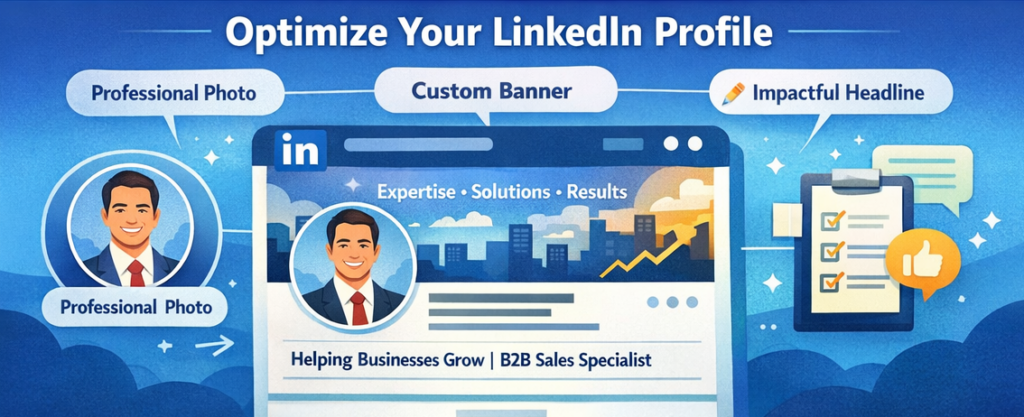
1. Professional Headshot and Banner
Your profile picture and banner are the first impressions potential prospects see. A high-quality professional headshot builds instant trust and humanizes your presence online. Studies show that LinkedIn profiles with pictures are significantly more likely to be viewed than those without.
But your banner image, the large background graphic, often gets overlooked, even though it’s prime real estate for brand positioning. A compelling banner:
- reinforces your value proposition
- visually communicates what you stand for
- complements your personal brand with clean, eye-catching design
According to design experts, your banner should be clean and strategic; think brand colours, professional context imagery, or messages that reflect your expertise.
Example Ideas for Banner Images:
- A photo from a speaking engagement with your tagline
- A visual representation of the problems you solve
- A simple branded design with your value statement
- Visuals that align with your industry (e.g., data charts for analytics experts)
Remember: your banner isn’t a billboard; it’s a trust signal. Avoid clutter and prioritize clarity over heavy text.
2. Compelling Headline & About Section
Your headline (the line underneath your name) should instantly convey who you help and how. Rather than a generic title like “Business Consultant,” use a format that speaks directly to results, such as:
Helping tech founders shorten sales cycles by building scalable growth processes.
This positions you as someone who can solve a problem, not just someone who holds a job.
Your About section should narrate your journey, expertise and reason for helping clients: all in a first-person, benefit-oriented style. Put your ideal clients front and centre: speak about their challenges and how you help solve them.
Build a Strategic Network
Social selling isn’t reaching everyone but reaching the right people. LinkedIn’s advanced search tools allow you to filter contacts by job title, industry, location, and company size. With tools like Sales Navigator, you can create saved searches and alerts that help you stay engaged with your ideal audience.
Here’s how to approach your network:
- Identify decision-makers and influencers within your niche
- Prioritize engagement with active profiles: those who post or comment frequently
- Personalize connection requests rather than sending generic messages
Personalized outreach greatly increases connection acceptance and helps you build trust before any sales dialogue begins.
Consistent Content Strategy: Educate, Don’t Sell
Content is the lifeblood of LinkedIn social selling. Posting consistently with value-driven content helps establish your expertise in front of your audience. Most successful B2B leaders post 2–3 times per week, mixing formats like text posts, document carousels, images with insights, polls, and short videos.
Here’s what to focus on:
1) Thought Leadership Content
Share insights that educate your audience such as case studies, frameworks, trends and lessons learned in your industry. This builds credibility and positions you as a go-to resource.
2) Storytelling and Real Experiences
Narratives connect emotionally. When you share the why and how behind your successes or failures, readers are more likely to engage and remember you.
3) Engagement-Driven Formats
Use polls or ask questions that invite comments. LinkedIn rewards engagement, and active discussions can increase your visibility beyond your immediate network.
4) Engage Authentically With Prospects
Once content is live, you must show up in conversations. Engage with others’ posts by leaving insightful comments, not just likes. Thoughtful engagement increases visibility and signals to LinkedIn that you’re adding value and not just pushing for sales.
Engagement also softens the path for direct outreach later. When prospects see you participating meaningfully in conversations, you’re not entering their inbox as a familiar, credible voice and not merely as a stranger.
Move From Engagement to Conversations
After building rapport through content and engagement, it’s time to convert relationships into genuine outreach. But in social selling, context matters:
- Reference a post they shared or commented on
- Offer a specific insight or resource based on their interests
- Keep your messages concise and personalized
This thoughtful approach contrasts with cold pitches and dramatically increases response rates.
Measure, Optimize, Repeat
LinkedIn social selling isn’t a one-off activity but a continuous cycle of improvement. Track metrics like:
- Profile views
- Content engagement
- Connection growth
- Message reply rates
Over time, you’ll see patterns that tell you what resonates most with your audience. Use these insights to refine your content, targeting and outreach strategy.
LinkedIn Is More Than a Profile: It’s a Platform for Relationships
LinkedIn is not just a place to post your resume; it’s a live environment built for trust, credibility, and connection. When you approach it strategically with optimized visuals, consistent content, and authentic engagement, you transform your LinkedIn presence into a powerful social selling engine.
Whether you’re a marketer, founder, salesperson, or consultant, embracing LinkedIn’s tools and tactics helps you build meaningful B2B relationships that last, and convert.
Start with your profile. Make your banner speak. Then let your voice and value do the rest.
Social Buzz’s Perspective on LinkedIn-Led B2B Growth
At Social Buzz, we look at LinkedIn not just as a platform, but as a long-term brand-building space where credibility, consistency and clarity come together. From the way professionals position themselves visually to how they show up in conversations, every touchpoint contributes to trust. What may seem like a simple banner image or a profile update often reflects deeper intent, strategic thinking and audience understanding. Our focus is on decoding these signals why certain personal brands stand out, how they influence professional relationships, and what they reveal about effective B2B social selling today.
As we continue to explore evolving digital behaviours and professional storytelling, we invite you to follow along. Because LinkedIn success isn’t driven by algorithms alone; it’s shaped by people, perception and the value they consistently deliver.
Stay tuned as Social Buzz continues to break down strategies that turn presence into influence and conversations into long-term business impact.
FAQs
1. What is B2B social selling on LinkedIn?
B2B social selling on LinkedIn is the practice of building relationships with potential clients through consistent content, engagement, and conversations rather than direct selling. It focuses on trust, expertise, and long-term value creation.
2. How important is personal branding for LinkedIn social selling?
Personal branding is critical because buyers prefer to engage with people they trust, not faceless companies. A strong personal brand through profile optimisation, content, and visuals helps establish credibility and accelerates relationship-building.
3. How do LinkedIn banner images support social selling?
LinkedIn banner images act as visual positioning tools. They communicate your expertise, values, and focus areas at a glance, reinforcing your message before a prospect reads your profile or engages with your content.
4. How often should I post on LinkedIn for effective B2B social selling?
Posting 2-3 times a week is generally effective for staying visible without overwhelming your audience. Consistency matters more than frequency, especially when content is relevant and insight-driven.
5. Can LinkedIn social selling work without Sales Navigator?
Yes. While Sales Navigator offers advanced targeting and insights, effective social selling can still be achieved through profile optimisation, organic content, thoughtful engagement and personalised outreach using LinkedIn’s native features.
Author