The LinkedIn Hook Formula: 5 Ways to Stop the Scroll Instantly

LinkedIn is no longer just a platform to list experience — it’s where professionals build influence, spark conversations, and win opportunities. But with millions of posts published every single day, visibility is no longer guaranteed. The challenge isn’t just creating valuable content; it’s ensuring people actually stop to read it.
And that’s where the hook comes in. The first line of your post determines whether your audience engages or scrolls past. A weak opening buries even the best content, while a strong one can turn a simple thought into a viral idea. Think of the hook as the billboard on a busy highway — short, striking, impossible to ignore. When crafted intentionally, it increases retention, boosts engagement, and positions you as a thought leader worth listening to.
Below are five high-impact hook formulas you can start using today to grab attention and make your content unskippable instantly.
1. Start with a Bold Statement
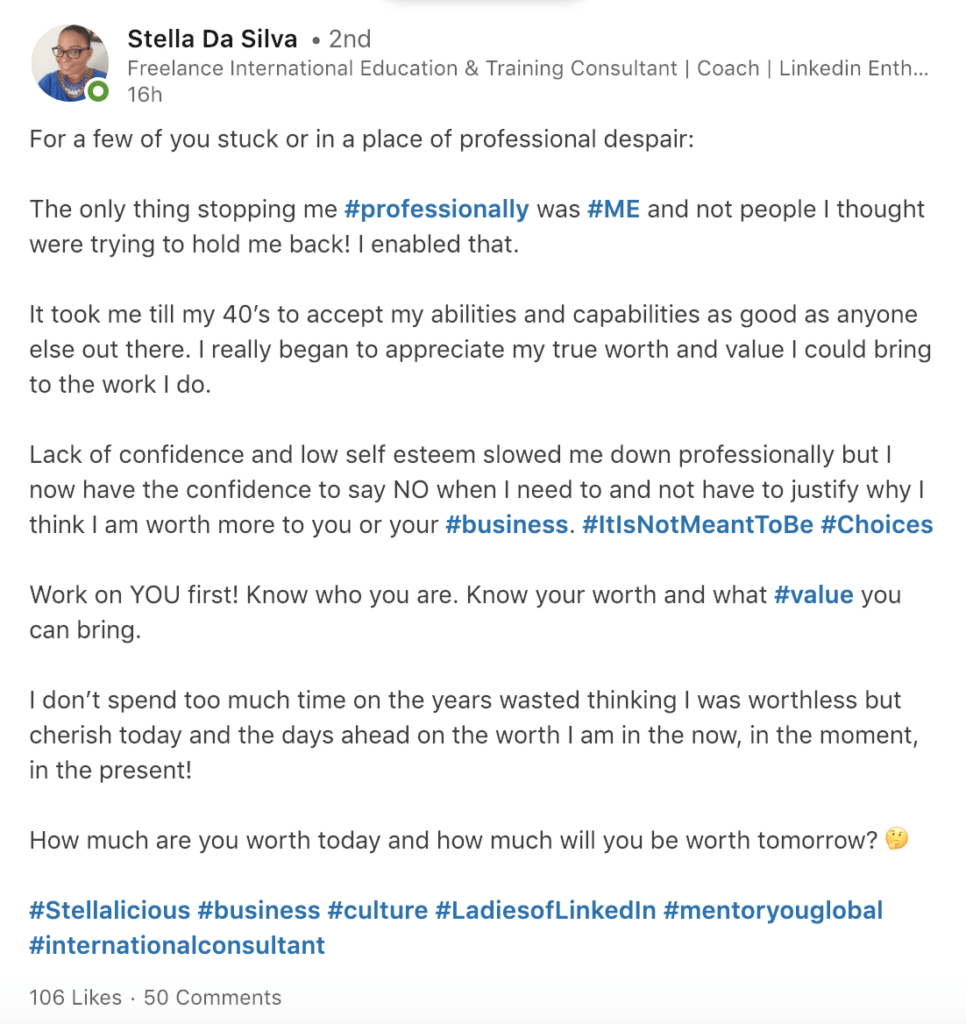
Stella Da Silva’s LinkedIn post is a good example of this.
Bold statements disrupt scroll patterns and create an immediate emotional response. They are decisive, confident, and spark curiosity. When you say something unexpected or strong, the reader wants context — and keeps reading to find it.
Example hooks:
- “Your LinkedIn profile isn’t a resume — it’s a sales page.”
- “Most startups don’t fail because of product — they fail because of distribution.”
A powerful hook doesn’t whisper — it opens with impact.
2. Ask a Question Your Audience Can’t Ignore
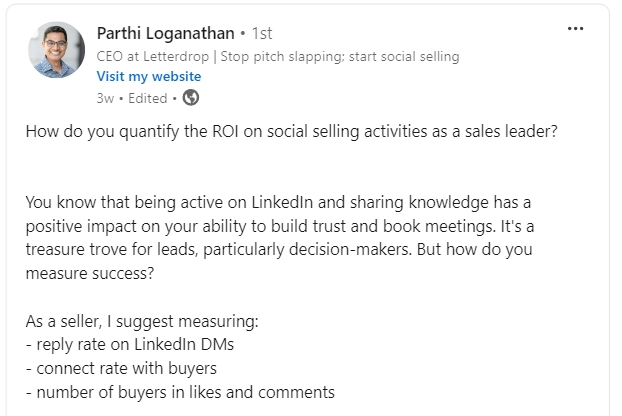
Parthi Loganathan’s LinkedIn post is a good example of this.
Questions create mental engagement. When framed around relatable challenges, opportunities, or curiosity triggers, they compel readers to reflect and continue reading for answers.
Examples:
- “Struggling to get leads from LinkedIn despite being consistent?”
- “Ever posted something you loved, but it got barely any reach?”
- “If you had to describe your brand in one sentence — could you?”
Questions work best when they speak to pain points or aspirations.
3. Use Numbers, Lists, or Frameworks
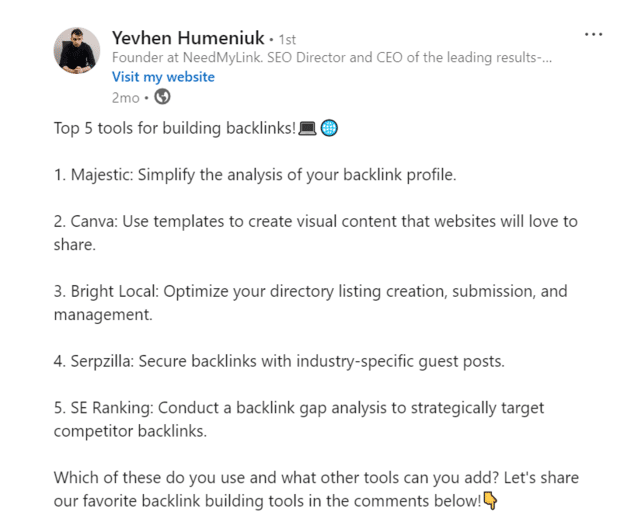
Yevhen Humeniuk’s LinkedIn post is a good example of this.
Numbers signal structure. They tell the reader, “This won’t waste your time.” Posts that highlight lists, templates, or frameworks often perform better because they promise clarity and action.
Examples:
- “5 mistakes stopping your LinkedIn growth.”
- “3 steps to turn your profile into a lead magnet.”
Structured hooks provide direction — and direction builds trust.
4. Start with a Story or Personal Insight
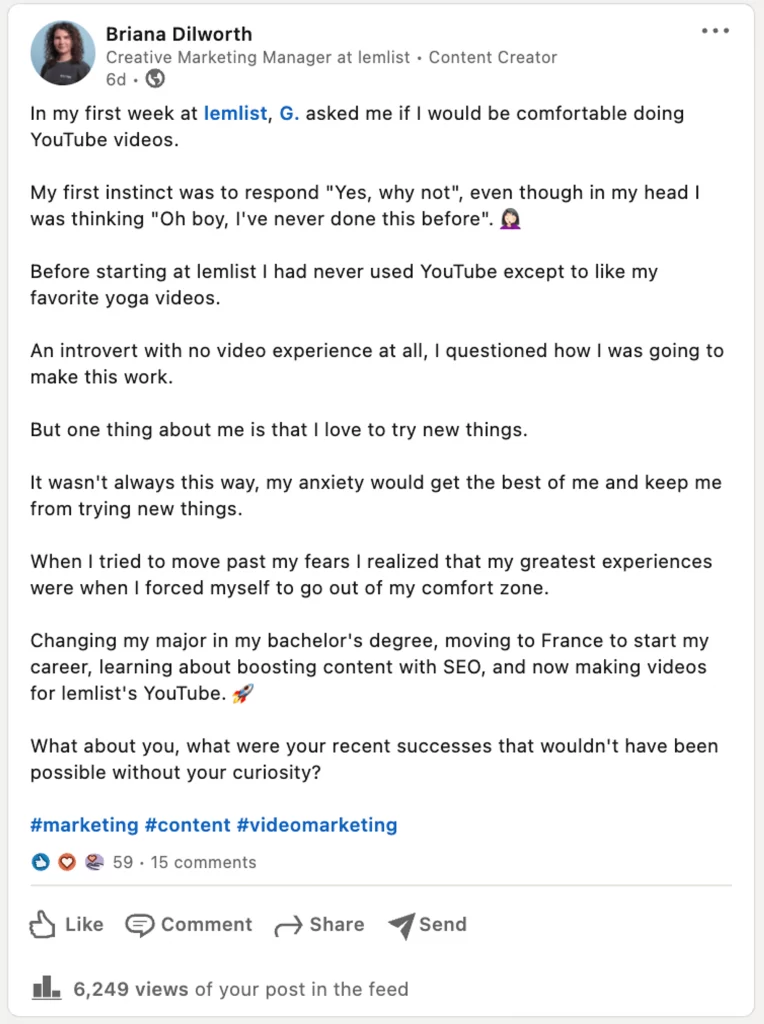
Briana Dilworth’s LinkedIn post is a good example of this.
Stories humanize your content. They create connection and emotion — the two pillars of relatability. Sharing a real moment, challenge, or turning point keeps readers curious about what happened next.
Example:
“Last year, I posted every day for 30 days. On Day 7, I wanted to give up — until something changed…”
People may forget tips, but they remember stories.
5. Present a Contrarian View
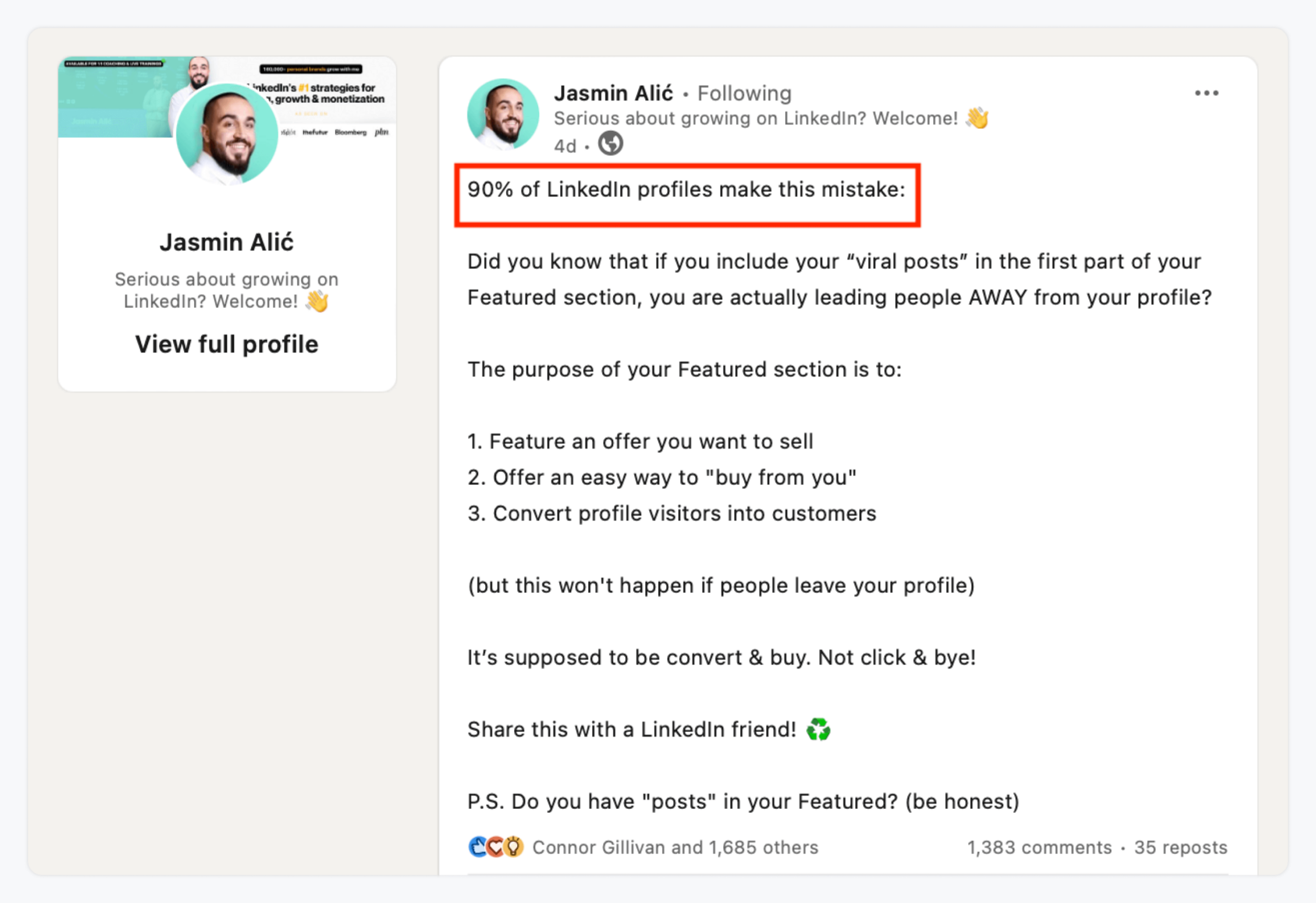
Jasmin Alic’s LinkedIn post is a good example of this.
When you challenge common beliefs, you stand out instantly. Contrarian hooks break patterns and start conversations — even debates — which can drive massive organic reach.
Examples:
- “Posting daily won’t grow your brand — value will.”
- “Networking isn’t about quantity, it’s about alignment.”
Be bold, but also be insightful — controversy alone isn’t strategy.
Also Read: Mad Men vs. Modern Marketing: What’s Changed, What Hasn’t
Conclusion
A powerful hook is not just an opening sentence — it’s a strategic gateway to attention. In a feed where content moves fast, the first line must earn the right for the next. With consistent practice, these five hook formulas will help you create posts that stop the scroll, spark curiosity, and build authority over time. Think of each hook as a handshake, an invitation, a reason for your reader to say — Tell me more.
If you want structured content frameworks, personal branding strategy, and LinkedIn content creation support, Social Buzz helps professionals and brands build visibility, credibility, and digital influence through smart storytelling and growth-focused content.
FAQ’s Section
1) What is a LinkedIn hook, and why is it important?
A LinkedIn hook is the first line of your post that grabs attention and makes people stop scrolling. It’s important because even great content won’t get engagement if people don’t read past the opening line. A strong hook increases visibility, reach, and interaction.
2) Which hook formula works best on LinkedIn?
There’s no single “best” hook. Bold statements, questions, numbers, stories, and contrarian views all work; the key is choosing what fits your message and audience. Testing different formats helps you understand what resonates most with your network.
3) Can hooks really improve LinkedIn engagement?
Yes. Hooks directly impact how many people pause, read, react, comment, or share your post. A strong hook improves dwell time, which signals LinkedIn’s algorithm to push your content to more users.
4) How often should I change my hook style?
It’s good to rotate hook styles regularly. Using the same type every time can feel repetitive. Mixing formats keeps your content fresh, helps you reach different audience segments, and improves overall performance.
5) Do hooks matter if my content is already valuable?
Absolutely. Value matters, but hooks help people discover that value. Think of the hook as the door without opening it; no one gets to see what’s inside, no matter how good it is.
Author




Comment (01)