
From SEO to AEO: Why Businesses Must Adapt to AI-Driven Mentions

The digital search ecosystem is witnessing one of its most defining transitions since the birth of Google. What started as a keyword-driven SEO game has now evolved into an AI-first world where Answer Engine Optimization (AEO) takes center stage. This is not a minor shift—it is a fundamental reordering of how information is discovered, consumed, and trusted.
With platforms like Google’s Search Generative Experience (SGE), ChatGPT, Bard, and Perplexity AI shaping user behavior, businesses no longer compete for clicks alone. They now compete to be the authoritative answer cited in AI-driven summaries. Those who fail to adapt risk fading into digital obscurity.
What Is AEO and Why Does It Matter
AEO is all about being the answer itself, not just competing for a click. Instead of waiting for users to land on your website, AEO ensures your content is optimized for AI assistants to pick up, cite, and surface directly in their responses.
The pillars of AEO are:
- Direct, authoritative answers to user queries.
- Structured data and schema markup for machine comprehension.
- Conversational, voice-ready content that aligns with how people ask questions.
- Brand reinforcement through AI citations to build visibility.
And the urgency is crystal clear. According to Statista (2025), nearly 50% of Google searches now surface AI overviews, compared to just 25% in mid-2024. If your business isn’t included in that overview, your organic visibility is slipping away.
Why SEO Alone Is Insufficient
Traditional SEO strategies still matter, but they can’t do the heavy lifting on their own anymore.
- Declining Click-Through Rates: Google’s AI summaries and Perplexity AI deliver direct answers—leaving users with little reason to click through.
- Rise of Voice Search: Assistants like Siri, Alexa, and Bixby prioritize natural-language answers, not keyword-stuffed content.
- AI as Decision-Makers: These platforms don’t just retrieve information—they compare, contextualize, and recommend.
One striking example: In June 2025, Samsung entered talks with Perplexity AI to preload its conversational search engine across devices and integrate with Bixby. Moves like this prove that the battleground has decisively shifted toward AI-powered answers.
Building Trust with EEAT in the AEO Era
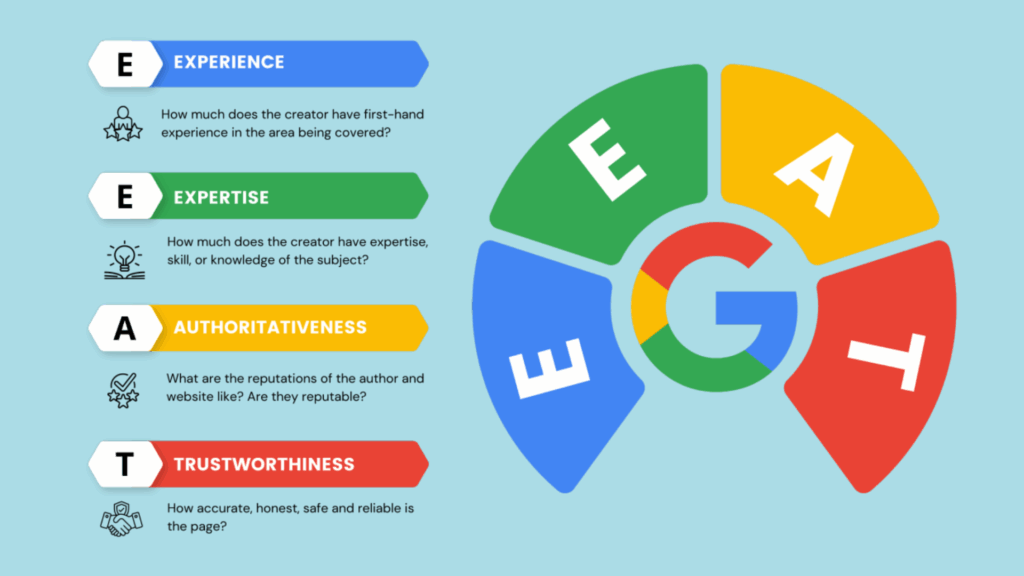
AEO doesn’t work in isolation—it thrives when paired with EEAT principles (Expertise, Experience, Authoritativeness, Trustworthiness). If you want AI to recognize and feature your brand, you need to signal credibility at every touchpoint.
Here’s how:
- Prove you’re the expert: Link team member names to their LinkedIn profiles. Show the people behind the brand.
- Industry-relevant blogs: Publish well-structured, insightful blogs that position your brand as a thought leader.
- Build trust through pages: Keep your About Us and Contact Us pages fresh, detailed, and SEO-optimized with schema.
- Write like a human: Manually written blog posts and authentic copy signal credibility—AI can detect thin, automated text.
- Keep content fresh: Update older posts with new data and insights to stay relevant in AI indexing.
- Help AI understand you: Add FAQs on your website so search engines have structured, easy-to-digest Q&A content.
- Let Google see it all: Ensure technical SEO hygiene so crawlers pick up your content fully.
- Use visuals: Add SEO-compliant images and videos that enhance storytelling.
- Earn mentions, not just links: Get your brand into press releases, industry publications, and mentions—AI engines pick up credibility signals.
- Track and improve: Regular SEO analysis ensures your AEO and EEAT strategy evolves with algorithm shifts.
These aren’t just “SEO tasks”—they’re credibility signals. In a world where AI decides what’s trustworthy, these signals are the difference between being cited or ignored.
Key Strategies to Win the AEO Race

If you want to thrive in this new environment, you’ll need a combined strategy:
- Prioritize Structured Data
Use FAQ schema, How-To schema, and knowledge graph optimization to make your brand AI-friendly. - Optimize for Conversational Queries
Write in Q&A style, target long-tail searches, and keep your tone natural yet authoritative. - Target Featured Snippets & Zero-Click Searches
Place direct answers at the top of your content. Use bullet points, short paragraphs, and subheadings for readability. - Build Authority Through Mentions
Secure backlinks, get quoted in publications, and position your team as thought leaders in your space. - Create AI-Friendly Content
Use concise paragraphs, data-backed insights, semantic coverage of related subtopics, and strong takeaways.
The Hybrid Future: SEO + AEO
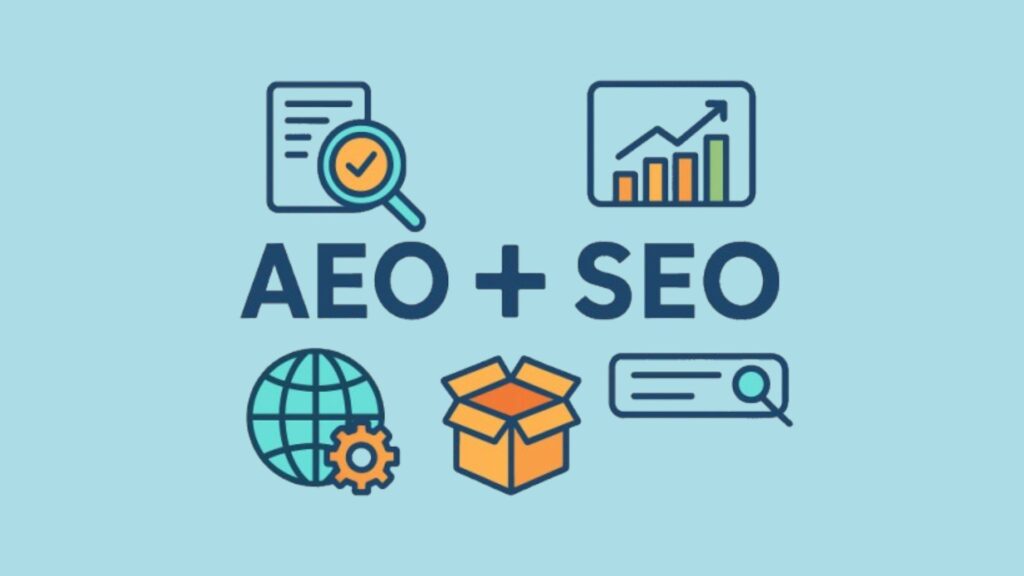
AEO doesn’t replace SEO—it extends it. The smartest businesses will maintain SEO to capture traditional traffic while also investing in AEO to win visibility in AI-generated answers.
With AI Max Ads already appearing in Google’s AI summaries, competition for organic visibility is only going to intensify. If you don’t adapt, you’ll be forced to rely on paid ads. But if you adopt AEO now, you future-proof your brand.
Also Read: 5 Proven LinkedIn Profile Branding Tips to Attract Opportunities
Conclusion: From Ranking to Relevance
The world of search is no longer about being on page one—it’s about being the answer itself. With half of all Google searches now surfacing AI summaries, the shift is already here.
By combining AEO strategies with EEAT best practices, businesses can ensure they’re not just visible but trusted, cited, and recommended. Brands that adapt will thrive in the AI-first ecosystem. Those who don’t will vanish quietly in the background.
At Social Buzz, we believe the future of search belongs to those who invest in machine-readable, human-driven content.
FAQ’s Section
1. What is Answer Engine Optimization (AEO)?
Answer Engine Optimization (AEO) is the practice of structuring and writing content so AI assistants and answer engines can directly use it as a cited answer in their responses. Instead of only competing for website clicks, AEO focuses on making your brand the authoritative response that appears inside AI overviews and conversational search results.
2. Why is traditional SEO no longer enough?
Traditional SEO alone is insufficient because AI-generated summaries, overviews, and voice assistants now answer many queries without users needing to click through to websites. With nearly 50% of Google searches surfacing AI overviews in 2025, brands that don’t optimize for AEO lose visibility even if they still rank on page one.
3. What are the key pillars of AEO?
The main pillars of AEO are direct, authoritative answers, structured data and schema markup, conversational and voice-ready content, and brand reinforcement through AI citations. Together, these help machines understand your content, trust your expertise, and surface your brand as a reliable answer.
4. How does EEAT help with AEO?
EEAT (Expertise, Experience, Authoritativeness, Trustworthiness) strengthens AEO by signalling to AI systems that your content and brand are credible. Showing real experts, publishing insightful blogs, maintaining strong About and Contact pages, updating content, and earning mentions all increase your chances of being selected in AI-generated answers.
5. How can businesses make their content AI-friendly?
Businesses can make content AI-friendly by using FAQ and How-To schema, writing in Q&A format, targeting conversational long-tail queries, and placing clear answers at the top of sections. Adding data-backed insights, semantic coverage of related subtopics, and maintaining technical SEO hygiene further helps AI crawl, understand, and cite the brand in its summaries.
Author






Comments (02)