contact@socialbuzz.org.in
+91 7042106011
  • Home
  • About Us
    • Our Team
  • Services
    • Website-Design & Development
    • SEO & Google Ads
    • Lead Generation
    • Social Media Marketing
    • Content Marketing
    • Online Reputation Management
  • Video
  • Podcast
  • Blog
  • Case Studies
  • Clients
  • Contact Us
  • Home
  • About Us
    • Our Team
  • Services
    • Website-Design & Development
    • SEO & Google Ads
    • Lead Generation
    • Social Media Marketing
    • Content Marketing
    • Online Reputation Management
  • Video
  • Podcast
  • Blog
  • Case Studies
  • Clients
  • Contact Us
  • Home
  • About Us
    • Our Team
  • Services
    • Website-Design & Development
    • SEO & Google Ads
    • Lead Generation
    • Social Media Marketing
    • Content Marketing
    • Online Reputation Management
  • Video
  • Podcast
  • Blog
  • Case Studies
  • Clients
  • Contact Us
  • Home
  • About Us
    • Our Team
  • Services
    • Website-Design & Development
    • SEO & Google Ads
    • Lead Generation
    • Social Media Marketing
    • Content Marketing
    • Online Reputation Management
  • Video
  • Podcast
  • Blog
  • Case Studies
  • Clients
  • Contact Us
Blog
Home Advertising campaigns Why “Melody Itni Chocolaty Kyun Hai?” Became One of India’s Most Memorable Advertising Lines
Advertising campaigns

Why “Melody Itni Chocolaty Kyun Hai?” Became One of India’s Most Memorable Advertising Lines

Nidhi Saxena March 11, 2026 0 Comments

Few advertising lines in India have achieved the cultural longevity of Melody’s famous question: “Melody itni chocolaty kyun hai?”
It is followed by the playful answer: “Melody khao, khud jaan jaao.”

The line first appeared decades ago in advertising for Melody, the chocolate-filled toffee produced by Parle. What began as a simple advertising hook gradually evolved into something much larger. Today, the phrase exists far beyond its original commercials. It appears in memes, jokes, social media captions and everyday conversations.

The remarkable part is that the question has never been meaningfully answered, and that is precisely why it works.

Melody did not attempt to explain its product through detailed messaging. Instead, it embraced curiosity, repetition and humour. The brand created a question that consumers themselves would keep repeating.

Over time, the question became the essence of the advertisement.

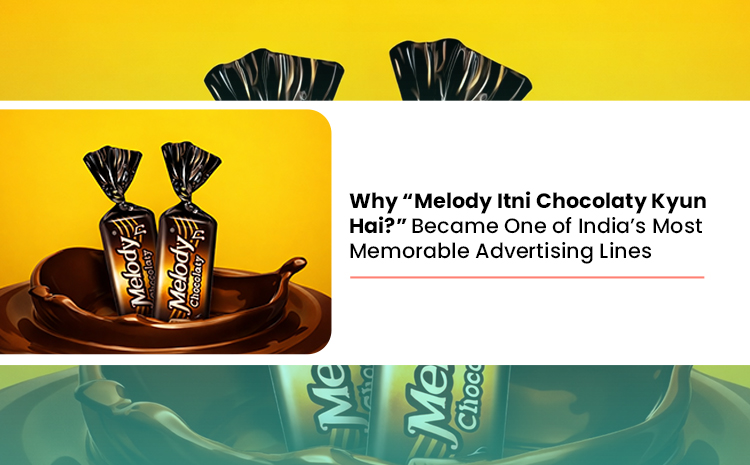
Image Source: Pinterest

A Question That Turned into Cultural Currency

Most advertising attempts to communicate a clear benefit. It explains why a product is better, faster or tastier. Melody approached communication differently.

The campaign posed a deliberately exaggerated question: Why is Melody so chocolaty? The tone felt playful rather than informative. The response offered no logical explanation. Instead, it simply redirected the consumer back to the product: Eat Melody and find out for yourself.

This structure created an unusual psychological loop. The question invited curiosity, while the answer withheld resolution. Viewers were left with a memorable phrase rather than a product claim.

Because the line was so simple, it travelled easily across contexts. People could repeat it humorously in unrelated situations. The phrase adapted naturally to conversations, jokes and eventually internet culture.

In marketing terms, Melody achieved something rare. The advertisement became a reusable cultural template.

Absurdist Humour as a Branding Tool

Melody’s communication relied on a form of humour that was subtly absurd. The premise itself was exaggerated. A toffee being so chocolaty that it demands philosophical inquiry is inherently ridiculous. Yet the delivery remained casual.

This balance between exaggeration and familiarity made the line feel playful rather than forced. Consumers recognised the exaggeration but enjoyed participating in it.

Absurdist humour works particularly well in brand communication because it creates cognitive friction. The brain notices something that does not entirely make sense. That moment of surprise increases memorability.

Melody’s campaign captured that moment effectively. The question was simple. The answer was deliberately unsatisfying. The humour emerged from the gap between the two.

Repetition That Built Long-Term Recall

One of Melody’s greatest strengths was consistency. The line did not change significantly over time. The format remained stable across campaigns. The same question appeared again and again.

Advertising research consistently shows that repetition strengthens memory structures. When consumers hear a phrase repeatedly in similar contexts, it becomes easier to recall automatically.

Melody benefited from this effect.

Over the years, the line stopped functioning merely as a tagline. It became shorthand for the brand itself. Mentioning the phrase immediately triggered recognition of the product.

Very few brands achieve this level of linguistic association.

Also Read: Lifebuoy’s Advertising Strategy

When Advertising Becomes a Meme

Long before the internet popularised meme culture, Melody had already created something meme-like. The phrase was adaptable. It could be applied to almost any situation where someone wanted to exaggerate curiosity or admiration.

As digital culture grew, the line found new life online. Social media users began inserting the phrase into unrelated jokes, parody captions and humorous comparisons. This organic reuse extended the life of the brand’s communication far beyond its original advertising spend.

In modern marketing language, Melody intrinsically achieved what brands now try deliberately: participatory humour.

Consumers did not simply remember the tagline but actively reproduced it.

Home » Blog » Why “Melody Itni Chocolaty Kyun Hai?” Became One of India’s Most Memorable Advertising Lines

The Strategic Simplicity Behind the Campaign

From a branding perspective, the brilliance of Melody’s campaign lies in its restraint. The advertisement avoided complicated storytelling. It did not attempt emotional drama or cinematic narratives. Instead, it focused on a single repeatable device: a question (Melody itni chocolaty kyun hai?)

This simplicity created three strategic advantages.

First, the message was instantly understandable across age groups and regions.
Second, the line was easy to repeat in everyday conversation.
Third, the brand could sustain the idea for years without needing to reinvent it constantly.

In an advertising landscape often driven by novelty, Melody demonstrated that a single idea executed consistently can outperform frequent reinvention.

The Branding Lesson from Melody

Melody offers an important lesson for marketers: memorability does not always come from explanation. Sometimes it emerges from curiosity.

By asking a question instead of presenting a detailed claim, the brand invited audiences to participate in the joke. The humour made the communication light. The repetition made it unforgettable.

Over time, the line moved beyond advertising and entered popular culture.That transition is rare.
It occurs only when a message is simple enough to repeat and unusual enough to remember. Melody managed to achieve both.

Social Buzz’s Perspective on Cultural Branding

At Social Buzz, we are interested in the moments when advertising stops behaving like advertising and begins behaving like culture.

Campaigns like Melody demonstrate how humour, repetition and simplicity can transform a product message into a cultural reference point. Beneath the playful tone lies a deeper strategic insight about how consumers remember brands.

Our work involves decoding these moments. Understanding why certain ideas travel further than others and identifying how brands can create messages that remain relevant long after a campaign ends.

Because the most powerful advertising does not simply promote products. Rather, it becomes part of how people speak.

Stay tuned as Social Buzz continues to unpack stories that have defined Indian branding over the years.

FAQs

1. What makes Melody’s tagline, “Melody itni chocolaty kyun hai?” so memorable?
Melody’s tagline is memorable because it uses a simple question-and-answer format combined with playful exaggeration. The repetition of the phrase helped embed it in everyday language and popular culture.

2. How does humour improve brand recall in advertising?
Humour creates emotional engagement and cognitive surprise. When consumers encounter something unexpected or amusing, they are more likely to remember the brand associated with it.

3. What is absurdist humour in advertising?
Absurdist humour exaggerates situations in a way that feels intentionally illogical or playful. This contrast captures attention and makes the message easier to remember.

4. Can simple taglines be more effective than complex campaigns?
Yes. Simple taglines are easier to repeat, recall and adapt to everyday conversation. Over time, repetition can make them strongly associated with the brand.

5. Why do some advertising lines become memes?
Advertising lines become memes when they are short, flexible and humorous enough to be reused in different contexts. When audiences begin repeating the phrase independently, the message gains cultural momentum.

Author

  • Nidhi Saxena
    Nidhi Saxena

    A flair for writing, reading and all things Literature, Nidhi Saxena has completed her Bachelors & Masters in English from Miranda House, Delhi University. With a solid 8+ years dedicated to penning down and executing numerous Digital Marketing campaigns with exemplary results, Nidhi has worked with a host of clients across public and private sector. Besides the Agency-side experience, Nidhi has also worked client-side and made a difference too. She has worked in tandem with numerous UN organizations and global organizations like ILO, Interpol, WHO, FAO, UNESCO, UN Women etc. during her stint as Social Media Coordinator for Nobel Peace Laureate Kailash Satyarthi. Currently, she runs a digital marketing agency, leading a brilliant team of talented and driven individuals who are always brimming with ideas.

ad campaigns Ads of Brands Advertising advertising insights Best Indian ad campaigns Branding Digital Marketing Digital Marketing Trends FMCG Ads in India humorous ads iconic ad campaigns indian television ads Intelligent marketing marketing Social Buzz Social Media Marketing traditional ad campaigns Traditional Marketing
1
55 Views
AboutNidhi Saxena
A flair for writing, reading and all things Literature, Nidhi Saxena has completed her Bachelors & Masters in English from Miranda House, Delhi University. With a solid 8+ years dedicated to penning down and executing numerous Digital Marketing campaigns with exemplary results, Nidhi has worked with a host of clients across public and private sector. Besides the Agency-side experience, Nidhi has also worked client-side and made a difference too. She has worked in tandem with numerous UN organizations and global organizations like ILO, Interpol, WHO, FAO, UNESCO, UN Women etc. during her stint as Social Media Coordinator for Nobel Peace Laureate Kailash Satyarthi. Currently, she runs a digital marketing agency, leading a brilliant team of talented and driven individuals who are always brimming with ideas.
Beyond The Game: Top 10 Super Bowl Ads of 2024-2026PrevBeyond The Game: Top 10 Super Bowl Ads of 2024-2026February 16, 2026

Related Posts

Advertising campaignsAI/Metaverse/Web3

Web3 Initiatives by Brands: Tan Luxe

Welcome to the world of Self Tanning with the Queen of Tanning- Paris Hilton as she...

ambujsaxena05 May 3, 2024
Advertising campaignsSocial Buzz Recommendations

5 heartfelt Republic Day campaigns

Every year, Republic Day brings a surge of national pride and vibrant marketing...

SocialAdm January 25, 2024

Leave a Reply Cancel reply

Your email address will not be published. Required fields are marked *

Recent Posts
  • Why “Melody Itni Chocolaty Kyun Hai?” Became One of India’s Most Memorable Advertising Lines
  • Beyond The Game: Top 10 Super Bowl Ads of 2024-2026
  • How to Use LinkedIn for B2B Social Selling
  • Content Strategies That Drive Real LinkedIn Growth
  • LinkedIn Blogging Strategy: How to Reach the Right Audience
Recent Comments
  • Why “Melody Itni Chocolaty Kyun Hai?” Became One of India’s Most Memorable Advertising Lines - Social Buzz - Times of India empanelled Digital Marketing Agency in Delhi on Lifebuoy Advertising Strategy: Bunty, “Tera Sabun Slow Hai Kya?” and A Behavioural Branding Case Study
  • LinkedIn Collaborative Articles: Tips & Tricks to Inspire on How LinkedIn’s Collaborative Articles Are Shaping Thought Leadership
  • Marky Ramone Go on How to Build and Grow a Loyal Community on LinkedIn 
  • Bedabrata Chakraborty on How to Build and Grow a Loyal Community on LinkedIn 
  • Renata on How to Build and Grow a Loyal Community on LinkedIn 
Archives
  • March 2026
  • February 2026
  • January 2026
  • December 2025
  • November 2025
  • October 2025
  • September 2025
  • August 2025
  • July 2025
  • June 2025
  • May 2025
  • April 2025
  • March 2025
  • January 2025
  • May 2024
  • April 2024
  • February 2024
  • January 2024
  • December 2023
  • October 2023
  • June 2023
  • May 2023
  • April 2023
  • March 2023
  • February 2023
  • December 2022
  • October 2022
  • September 2022
  • August 2022
  • June 2022
  • May 2022
  • March 2022
  • February 2022
  • January 2022
  • December 2021
  • September 2021
  • August 2021
  • July 2021
  • June 2021
  • May 2021
  • March 2021
  • February 2021
  • January 2021
  • December 2020
  • November 2020
  • October 2020
  • September 2020
  • August 2020
  • July 2020
  • June 2020
  • May 2020
  • April 2020
  • March 2020
  • February 2020
  • January 2020
  • November 2019
  • October 2019
  • September 2019
  • August 2019
Categories
  • Advertising campaigns
  • AI/Metaverse/Web3
  • Amazon
  • Branding
  • Business Blogging
  • Content Marketing strategy
  • COVID 19
  • digital marketing
  • Digital Marketing Trends
  • Influencer Marketing
  • Journalism
  • LinkedIn Updates
  • OTT Trends
  • Outdoor Advertising
  • Personal Branding on LinkedIn
  • Podcast
  • PPC
  • SEO/AEO/GEO
  • SMM
  • Social Buzz Recommendations
  • SOCIAL MEDIA MARKETING
  • Startup
Meta
  • Log in
  • Entries feed
  • Comments feed
  • WordPress.org
Categories
  • Advertising campaigns 40
  • AI/Metaverse/Web3 31
  • Amazon 2
  • Branding 9
  • Business Blogging 2
  • Content Marketing strategy 3
  • COVID 19 2
  • digital marketing 4
  • Digital Marketing Trends 21
  • Influencer Marketing 3
  • Journalism 1
  • LinkedIn Updates 23
  • OTT Trends 11
  • Outdoor Advertising 1
  • Personal Branding on LinkedIn 15
  • Podcast 5
  • PPC 2
  • SEO/AEO/GEO 15
  • SMM 8
  • Social Buzz Recommendations 15
  • SOCIAL MEDIA MARKETING 18
  • Startup 4
Recent Posts
No posts were found for display
Gallery


Tags
Advertising AEO AI Amazon Prime Ambuj Saxena artificial intelligence Branding chatgpt Content engagament Content Marketing Content Strategies content strategy Digital Marketing Digital Marketing Agency Digital Marketing Tips Digital Marketing Trends FAQ pages FAQ Section Grow Your LinkedIn Profile Linkedin LinkedIn Branding LinkedIn content strategy LinkedIn engagement LinkedIn Marketing LinkedIn personal branding LinkedIn Posting LinkedIn Profile LinkedIn Profile Building LinkedIn Updates marketing Marketing Tips metaverse Netflix OTT Platforms Personal Branding podcast Search Engine Optimisation seo Social Buzz social media Social Media Engagement Social Media Marketing Social Media Marketing Tips Social Media Tips twitter

Buoyed by its successful campaigns across 10+ sectors in a matter of a few months, Social Buzz has earned a highly positive word of mouth in a very short span of time. It’s time you hopped on our band wagon!
Services
Website-Design & Development
SEO & Google Ads
Pay Per Click
Social Media Marketing
Content Marketing
Content Marketing
Online Reputation Management
Contacts
Adress: Near National Heart Institute, D-143A 3rd floor, East of Kailash, New Delhi, Delhi 110065
Website: Social Buzz
Email: contact@socialbuzz.org.in
Phone: +91 7042106011
Terms of use | Privacy Environmental Policy

Copyright © 2019 Social Buzz. All Rights Reserved.