
How Piyush Pandey Shaped the Indian Ad Industry’s Golden Era

In the dynamic world of advertising, few names carry the same weight and warmth as Piyush Pandey. Known fondly as the Ad Man of India, Pandey has been more than just a creative force — he has been a storyteller, a cultural observer, and a teacher who transformed the very grammar of Indian advertising.
At a time when commercials were driven by borrowed Western sensibilities, Piyush Pandey brought India back into its own conversation. He infused emotion, everyday realism, and a deep understanding of Indian culture into brand storytelling — making advertising relatable, memorable, and timeless.
This is how Piyush Pandey shaped the Golden Era of Indian advertising, one idea at a time.
1. The Early Spark of a Creative Revolution
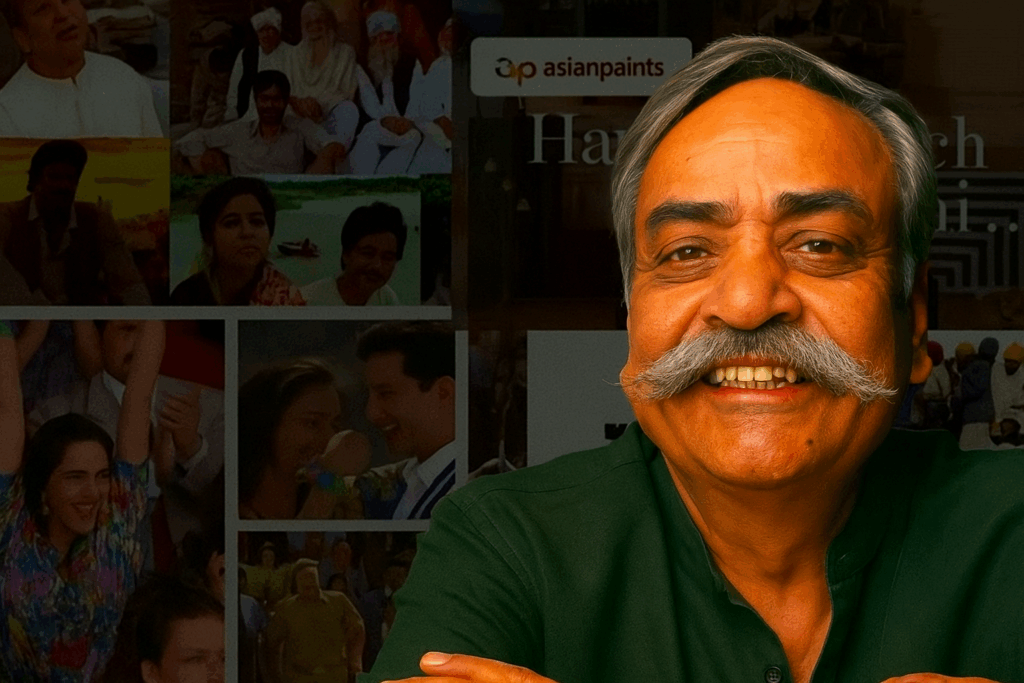
Piyush Pandey’s entry into advertising was almost accidental. A cricketer, sports enthusiast, and English literature graduate, he brought a fresh, human perspective to a space dominated by jargon and sophistication. He wasn’t trained to sell — he was trained to observe people, their habits, and their emotions.
That became his biggest strength. Pandey’s early work showed an instinctive ability to turn ordinary Indian experiences into extraordinary campaigns. His ads spoke in colloquial language, featured familiar faces, and told stories every Indian could connect with.
He didn’t just advertise products — he celebrated the people who used them.
2. The Art of Emotion-Led Storytelling
At the heart of every Piyush Pandey creation lies one truth: emotions sell better than logic. His campaigns often made people smile, tear up, or reflect — emotions that transcended the product itself.
Take Asian Paints’ “Har Ghar Kuch Kehta Hai”. It wasn’t just about paint or color choices. It was about the emotion a home carries — memories, stories, and family moments. Pandey captured that sentiment beautifully, turning a functional product into a symbol of emotion and belonging.
Similarly, Cadbury Dairy Milk’s “Kuch Khaas Hai Zindagi Mein” campaign redefined joy and innocence. The sight of a young woman dancing on the cricket field after a win remains etched in India’s advertising memory. It wasn’t about chocolate — it was about celebrating spontaneous happiness.
Through such campaigns, Pandey proved that great advertising doesn’t just sell — it speaks to the heart.
3. Humor, Simplicity, and Cultural Relevance
If there’s one thing Piyush Pandey taught India’s advertising world, it’s that simplicity is powerful. His sense of humor, rooted in real life and local idioms, made brands more human.
Consider the Fevicol series — from “Fevicol ka mazboot jod hai, tootega nahi” to the now-iconic “Bus ad” with people stuck together because of Fevicol. These weren’t just clever lines; they became part of India’s cultural vocabulary.
Likewise, the Fevikwik “Todo Nahi Jodo” ad, featuring fishermen and quick fixes, captured rural India’s wit and charm with brilliance.
Pandey’s mastery lay in observing how India lived and laughed — and translating that into campaigns that felt authentic.
He didn’t try to make ads for people; he made ads about people.
4. Shaping National Identity Through Advertising
Beyond brands, Piyush Pandey’s work often contributed to India’s collective consciousness. His involvement in campaigns like “Mile Sur Mera Tumhara” and “The Indian Army – Do You Have It in You?” showcased his ability to blend patriotism with artistry.
“Mile Sur Mera Tumhara,” though created early in his career, was a cultural milestone that united Indians through music and language diversity.
It wasn’t commercial — it was emotional. And it reflected what Pandey believed in most: advertising has the power to bring people together.
Even social awareness campaigns like “Daag Achhe Hain” (Surf Excel) redefined moral messaging. Instead of preaching cleanliness, the ad celebrated compassion and playfulness — a bold, human approach that made Indian advertising both socially aware and emotionally rich.
5. The Language of the People
Before Pandey’s era, Indian advertising often tried to sound aspirational — polished, accented, and distant. Pandey changed that completely.
He broke the language barrier in advertising. Hindi and other regional languages became tools of emotional connection rather than barriers to sophistication. His dialogues and slogans sounded like something your neighbor, teacher, or grandmother could say — and that’s exactly why they worked.
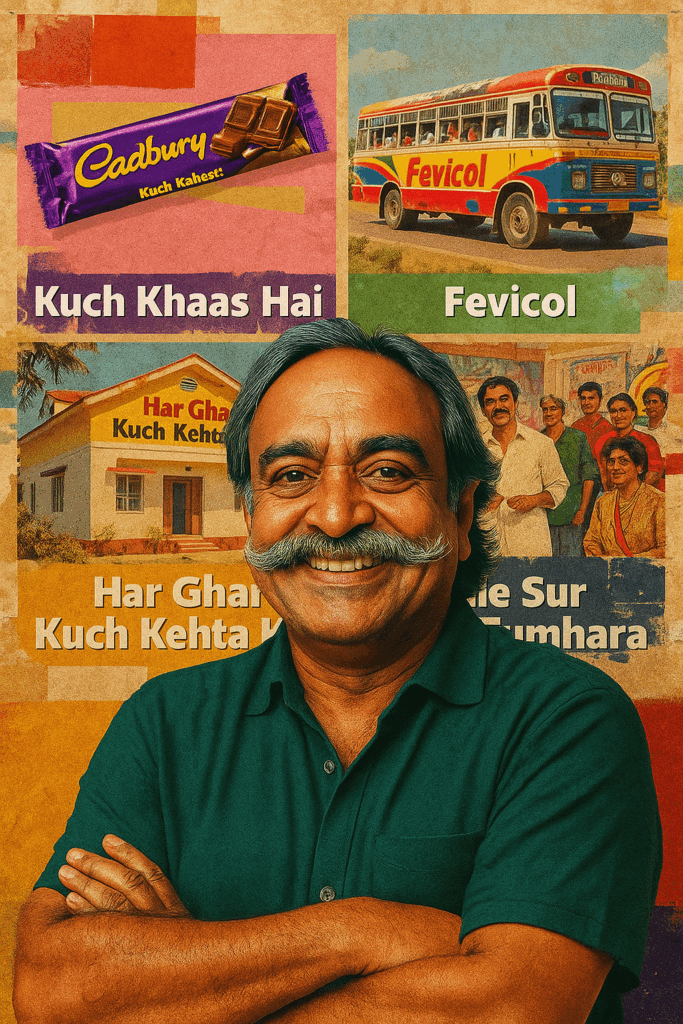
Phrases like “Har ghar kuch kehta hai,” “Fevicol ka jod hai,” “Kuch khaas hai zindagi mein,” and “Mile sur mera tumhara” were not just lines — they became idioms of Indian culture.
Pandey proved that the most powerful communication happens when brands speak the people’s language.
6. Influence on a Generation of Creatives
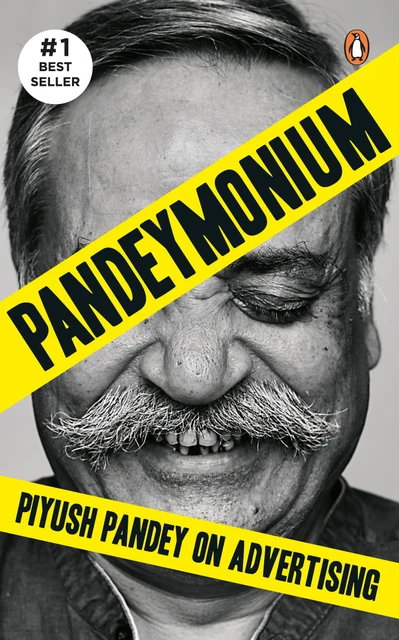
Image Source: Amazon.in
Piyush Pandey’s legacy extends far beyond his campaigns. He mentored countless advertising professionals who today lead creative teams across the country. His emphasis on curiosity, observation, and cultural grounding has shaped how young advertisers think.
He encouraged creatives to find stories in the ordinary — a shopkeeper, a schoolgirl, a festival, or a family dinner. For him, India itself was a storyboard waiting to be told.
Through workshops, talks, and his book “Pandeymonium,” he shared invaluable insights into how creativity thrives when you stay true to your roots.
7. The Golden Era and Its Lasting Echo
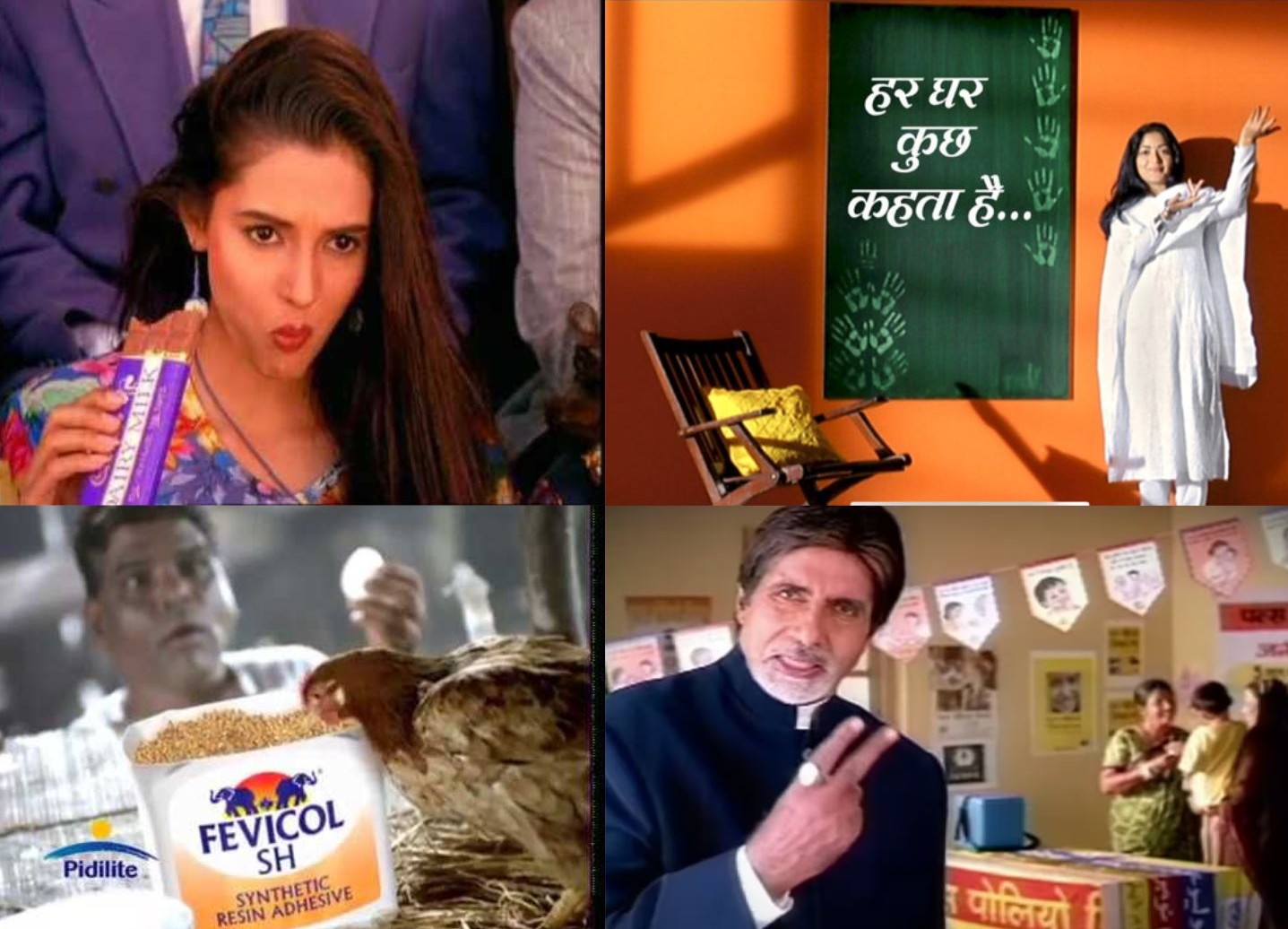
The 1990s and early 2000s — often regarded as the Golden Era of Indian advertising — bore the unmistakable mark of Piyush Pandey’s storytelling. It was an era when ads were not skipped but remembered, when jingles became household tunes, and when brands built trust through emotion, not algorithms.
Pandey’s philosophy was clear: “A good ad is one that people enjoy watching again and again — even if they don’t need the product.”
That belief turned advertising into entertainment, art, and emotion — all rolled into one. Even today, brands look back at that period for inspiration, trying to recapture the same authenticity and cultural resonance.
Also Read: Top 3 Iconic Ads by Piyush Pandey: The Mastermind Behind India’s Most Memorable Campaigns
Conclusion: Lessons from a Creative Legacy
Piyush Pandey didn’t just shape campaigns — he shaped a mindset. His work proved that the heart of advertising lies not in strategy decks or digital metrics, but in how deeply a story connects with real people.
Even in today’s digital-first, AI-driven marketing world, his principles remain timeless. Every marketer and creative professional can take away these lessons from his extraordinary journey:
- Be rooted in your audience. Don’t just analyze data — understand emotions.
- Keep it simple. The best ideas are often born from ordinary moments.
- Speak the people’s language. Authenticity always builds trust.
- Tell stories that endure. A great campaign should live in memory, not just on a timeline.
Piyush Pandey didn’t just create memorable ads — he created a philosophy of advertising that combined emotion, humor, and humanity. He taught an entire generation that advertising is not about shouting the loudest — it’s about speaking the truest.
In many ways, he didn’t just define the Golden Era of Indian advertising; he became its heartbeat. And that heartbeat continues to echo in every story-driven campaign that India creates today.
FAQ’s Section
1. How did Piyush Pandey shape the Golden Era of Indian advertising?
Piyush Pandey shaped Indian advertising’s Golden Era by introducing emotion-led storytelling, cultural realism, and colloquial language that made brands relatable and memorable during the 1990s-2000s.
2. What made Piyush Pandey’s advertising style unique?
Piyush Pandey’s unique style featured humor, simplicity, and everyday Indian experiences using regional languages, turning ordinary moments into culturally resonant campaigns that spoke directly to audiences.
3. Which iconic campaigns did Piyush Pandey create?
Iconic Piyush Pandey campaigns include Asian Paints “Har Ghar Kuch Kehta Hai,” Cadbury Dairy Milk “Kuch Khaas Hai Zindagi Mein,” Fevicol “Mazboot Jod Hai,” and Surf Excel “Daag Achhe Hain,” blending emotion with product messaging.
4. Why did Piyush Pandey use local languages in Indian advertising?
Piyush Pandey used Hindi and regional languages to break sophistication barriers, creating authentic emotional connections that made advertising feel like conversations with neighbors rather than distant sales pitches.
5. What lessons can marketers learn from Piyush Pandey’s advertising philosophy?
Marketers learn from Piyush Pandey to prioritize audience emotions over data, embrace simplicity from ordinary moments, speak authentically in people’s language, and create enduring stories that build lasting brand trust.
Author







Comment (01)