
Personal Branding for CEOs and Founders: How to Humanize Your Leadership

In today’s digital marketplace, people trust leaders before they trust brands. A strong personal brand for CEOs and founders can humanize leadership, build credibility, and create an emotional connection with customers, employees, and investors. When leaders show authenticity, values, and real perspectives, they attract respect — not just followers.
Personal branding is no longer optional for modern leadership; it is a strategic asset. It allows founders and CEOs to represent not just the company, but the vision behind it. This blog explores how leaders can build a powerful personal brand by being more human, more visible, and more intentional in how they communicate.
1. Lead With Your Story — Not Just Your Position
The most memorable leaders share their journey, not just their success. Instead of only speaking about revenue milestones or product achievements, CEOs and founders should narrate how they got there — the struggles, early rejections, turning points, and decisions that shaped who they are today. Story-driven leadership builds emotional trust and separates you from others in your industry. For example, Brian Chesky of Airbnb often talks about how the company started with renting air mattresses to pay rent — a story that instantly humanizes him and inspires thousands of entrepreneurs. Your personal story is your strongest brand element — make it visible.
2. Use Thought Leadership Content to Reflect Your Thinking
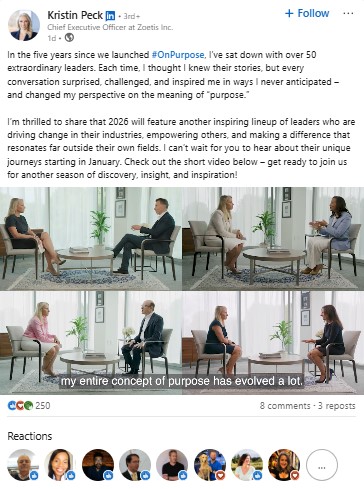
Kristin Peck’s post consistency is a great example of this.
A significant part of a CEO’s personal branding lies in communicating ideas, opinions, and expertise publicly. Sharing content consistently — whether through LinkedIn articles, short posts, podcasts, or interviews — showcases your thought process and positions you as an industry voice. Talk about lessons from leadership, challenges you navigated, decisions you regret or are proud of, trends you believe in, and insights from books or mentors. When CEOs share thoughtful reflections, it signals maturity, experience, and clarity of vision.
3. Show the Human Side of Your Leadership
A personal brand becomes powerful when people see the person behind the leader. Beyond strategic announcements, share glimpses of life that highlight your personality — a hobby you enjoy, a travel experience that taught you patience, a fitness routine that keeps you disciplined, or even a failure you learned from. Human moments create emotional connection and make leadership feel approachable. Satya Nadella frequently speaks about empathy shaped by his family life, which strengthens his global reputation for compassionate leadership. Humanized content reminds people that behind the title is someone who feels, learns, grows, and evolves.
4. Engage With Your Audience — Don’t Just Broadcast
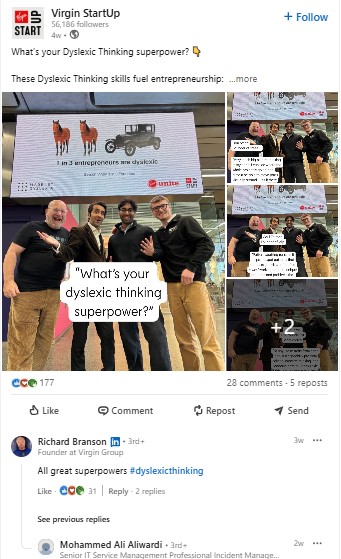
Richard Branson’s LinkedIn posts are a great example of this.
Posting content alone doesn’t build a personal brand — engagement does. Responding to comments, participating in discussions, acknowledging opinions, and appreciating feedback show you are present and listening. When CEOs engage actively, it signals humility and accessibility. This not only boosts reach on platforms like LinkedIn but also builds long-term trust with the audience. A leader who listens is valued more than a leader who only instructs. Richard Branson is known for replying to followers, sharing customer stories, and interacting with employees online, which reinforces his image as a dynamic and people-first leader.
5. Highlight Your Team to Build a Shared Leadership Brand
A strong CEO brand is not built by spotlighting oneself, but by uplifting the people behind the success. Appreciating employees publicly, celebrating milestones, showcasing company culture, and sharing behind-the-scenes moments reflect collaborative leadership. When leaders highlight their team, they build loyalty internally and trust externally. Many startup founders post stories of interns growing into leaders or teams solving difficult challenges, which makes the organization feel human and culture-driven. Your people are your brand ambassadors — showcasing them amplifies your credibility and leadership style.
6. Be Consistent — Visibility Builds Recall
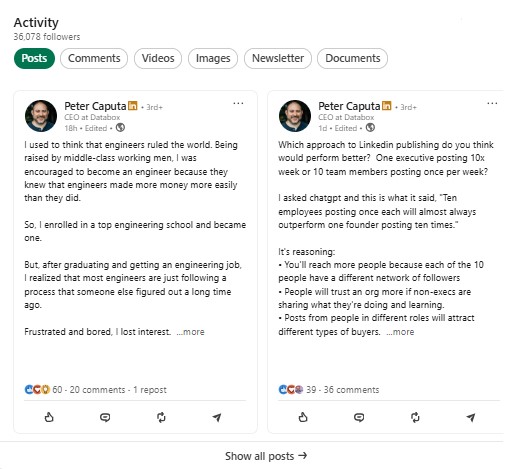
Peter Caputa’s LinkedIn Post is a great example of this.
Influence is built through repetition and consistency. Posting once a month won’t create a personal brand — showing up regularly with meaningful content will. CEOs and founders can maintain consistency by sharing one leadership thought every week, monthly business learnings, responses to industry trends, or even short video reflections. Over time, consistency shapes perception — people begin to associate your name with value, insight, and leadership.
Also Read: Southeast Asia’s Most Awarded Agencies of 2025: What Made Them Agency of the Year Winners
Conclusion
Personal branding for CEOs and founders is about showcasing credibility with a human touch. When leaders share their story, express thoughtful perspectives, communicate their values, and engage with people authentically, they build influence that attracts opportunities, talent, trust, and long-term community. A humanized leader leaves an impact that goes beyond business metrics — they inspire.
At Social Buzz, we help business leaders and founders build authentic personal brands through strategically crafted content, storytelling, and positioning. If you’re ready to strengthen your leadership voice and grow your digital influence, our team is here to support you every step of the way.
FAQ’s Section
1. What is personal branding for CEOs and founders?
Personal branding for CEOs and founders is the practice of building a public identity based on leadership values, experiences, expertise, and personality. It helps leaders establish trust, credibility, and emotional connection with audiences beyond the company brand.
2. Why is personal branding important for CEOs today?
Personal branding is important because people trust leaders more than logos. A strong CEO’s personal brand increases brand credibility, attracts investors and talent, strengthens customer loyalty, and positions the leader as an industry authority.
3. How can CEOs humanize their leadership through personal branding?
CEOs can humanize leadership by sharing personal stories, leadership lessons, failures, daily learnings, and human moments. Engaging with audiences, showing empathy, and highlighting team contributions also make leadership more relatable and authentic.
4. Which platforms are best for a CEO’s personal branding?
LinkedIn is the most effective platform for CEO’s personal branding, followed by podcasts, blogs, interviews, and short-form video platforms. These channels allow leaders to share thought leadership, engage with audiences, and build consistent visibility.
5. How often should CEOs post content to build a strong personal brand?
CEOs should ideally share content at least once or twice a week to build visibility and recall. Consistent posting of leadership insights, industry opinions, and personal reflections helps establish long-term trust and authority.
Authors





Great article. I agree, a humanized leader makes the difference and becomes a better CEO.
Thank you for your appreciation Alejandra! Do follow us for more such content.
Great read! Strong, human-centered leadership truly makes all the difference. A business can thrive or struggle based on its leadership, you want a CEO who genuinely cares, leads with passion, shows understanding, and inspires others as a real, hands-on leader within the brand or organization.
Thank you Lisa! Indeed a human-centered leadership can transform an organisation. Real human qualities in leadership help them connect better and bring in the desired results effortlessly from their team.
That is good. Leadership is hard to do especially if you are nor confident on what you are doing.
Thank you Nikki! Indeed leadership can be a tough spot but the power of transformation that lies within the role should be an inspiration.
I love the idea of leading with your story and not just your product. People are far more likely to connect with a brand when it’s a personal level.
Thank you Beth! Having done personal branding for a diverse set of eminent personalities, I can completely vouch for this.
Great article with a lot of credible information. A strong CEO with great people skills is a must as this creates trust in a brand and with trust leadership is respected xx
Thank you Melanie! Indeed establishing trust for a brand is the first step towards ensuring customer loyalty
Building a personal brand is so important for leaders in companies, but also for those who own their own businesses. I am always working on my personal brand as a blogger, too, so I am going to put some of these ideas into practice this year.
Glad you found these helpful Stephanie! These days consumers are sold on the story behind a brand, making it all the more essential to build your personal branding.
Hearing someones back story can help motivate and inspire. Engagement makes all the difference and helps you connect with your followers.
Indeed Melanie! It helps bring a greater engagement and produces more brand loyalists.
I really appreciated how clearly you broke down the steps to build a strong personal brand as a CEO. Your practical tips make what can feel overwhelming much more approachable. The emphasis on authenticity, consistent communication, and aligning personal values with business goals really stood out to me as something that can genuinely elevate leadership presence. Thanks for sharing such actionable insights that are useful for both new and seasoned founders looking to strengthen their influence and impact.
Thank you for your kind words Jerry! We help brand leaders bring these important points to action as well.
Humanizing a brand is so important. As well as yourself. Whether a SEO or even a manager, people are more likely to connect when it feels real.
Thank you for Barbie! It cannot be emphasized enough.
building a personal image online helps people connect with the actual human behind a big corporate name.
Very true Kat! And this connect goes a long way in creating brand enthusiasts.
Agree – consistency across platforms !! It’s something people always overlook , and your example is important how much that impacts credibility.
Being consistent also shows ones commitment to their brand and makes a brand more human.
Such an amazing article… that can inspire us and motivate towards a successful career and life in strategy, passion and leadership in work ethics
Thank you Cathy! Hope it inspires leaders behind a brand to be more transparent and more forthcoming to tell their tale.